How Does 308 Recoil Compare to Other Rifle Cartridges?
How much does the 308 recoil? Most experienced shooters say it’s mild, which would explain why the 308 Winchester has remained one of the most popular rifle cartridges for so many decades.
This article discusses how much kick the 308 Win has, how it compares to other popular rifle cartridges, what influences recoil, and how to reduce recoil to as little as possible.
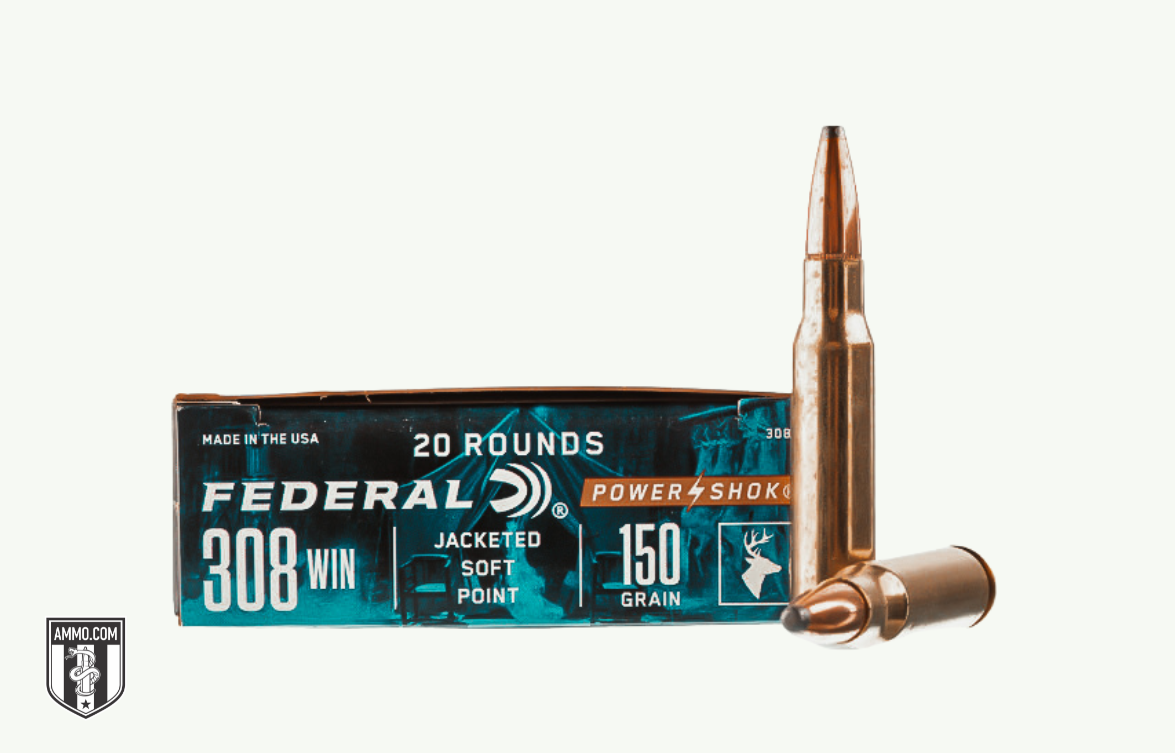
How Much Recoil Does .308 Have?
The 308 Win has an average of about 14.6 ft-lbs of recoil energy. It generally ranges from 13.5 to 15.2 ft-lbs, depending on several factors discussed in the following section. The 308's recoil is on par with many rifle cartridges and substantially less than most long-range ones. For example, the 300 PRC magnum cartridge generates up to 39 ft-lbs of energy.
Shooters typically find recoil stronger than 15 ft-lbs to be uncomfortable – the reason why many should steer clear of the 308 Win.
Factors That Influence Recoil for .308
"Felt recoil" is subjective. It varies from shooter to shooter, making it an unreliable reflection of how much recoil a cartridge generates.
For example, a seasoned shooter would feel that the 243 Win's recoil (9 ft-lbs kinetic energy) is very manageable. On the other hand, an inexperienced shooter might feel the 243 Winchester kicks too much. This is why it's typically best for new shooters to start off with 22 LR (0.18 ft-lbs) or 223 Rem/5.56 NATO (5 ft-lbs).
"Free recoil," on the other hand, is objective. This measurement of kinetic energy is determined solely by projectile weight, propellant weight, muzzle velocity, and rifle weight. For example, when a 308 Win cartridge with a 39 grain propellant charge fires a 150 grain bullet from a 9-pound rifle at a muzzle velocity of 2,820 fps, its free recoil energy equals 13.5 ft-lbs. When we increase bullet weight to 180 grains, lower muzzle velocity to 2,570 fps, and keep everything else the same, free recoil energy increases to 15.2 ft-lbs.
How .308 Recoil Compares to Other Calibers
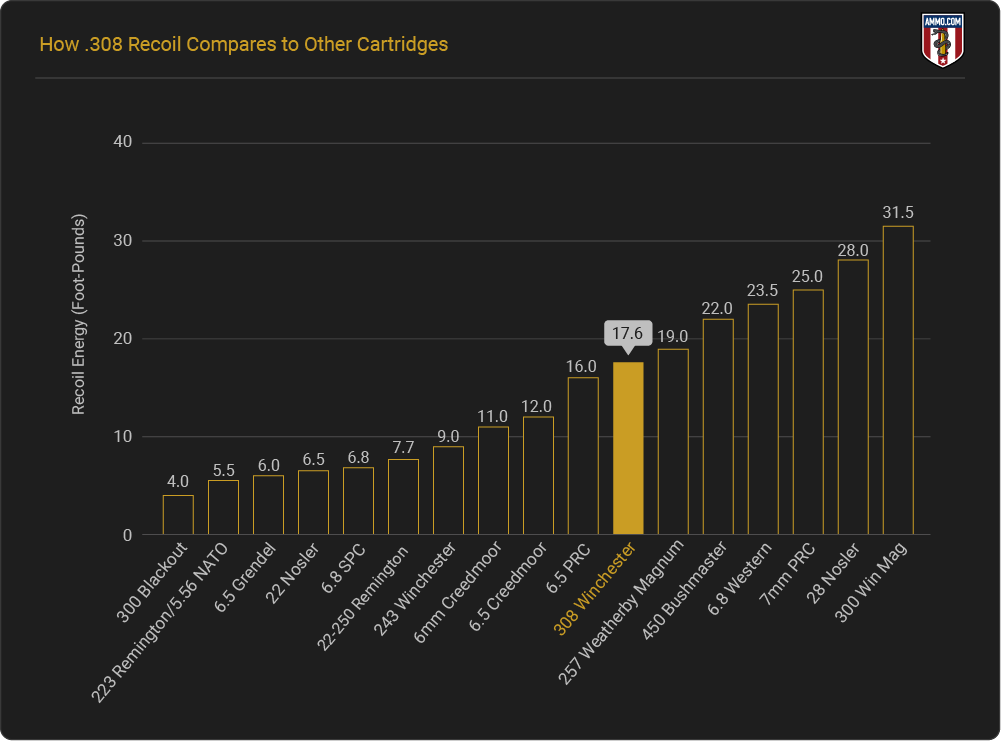
The 308 Win's recoil is manageable compared to many other rifle cartridges. Check out the chart below to compare it to many of the other standard and magnum rifle cartridges commonly used for hunting and long-distance shooting. This table assumes 8-pound rifles across the board to produce as equal a comparison as possible, which is why figures differ from those listed above.
| Cartridge | Free Recoil Energy |
|---|---|
| 300 Blackout | 4 ft-lbs |
| 223 Remington/5.56 NATO | 5.5 ft-lbs |
| 6.5 Grendel | 6 ft-lbs |
| 22 Nosler | 6.5 ft-lbs |
| 6.8 SPC | 6.8 ft-lbs |
| 22-250 Remington | 7.7 ft-lbs |
| 243 Winchester | 9 ft-lbs |
| 6mm Creedmoor | 11 ft-lbs |
| 6.5 Creedmoor | 12 ft-lbs |
| 6.5 PRC | 16 ft-lbs |
| 308 Winchester | 17.6 ft-lbs |
| 257 Weatherby Magnum | 19 ft-lbs |
| 450 Bushmaster | 22 ft-lbs |
| 6.8 Western | 23.5 ft-lbs |
| 7mm PRC | 25 ft-lbs |
| 28 Nosler | 28 ft-lbs |
| 300 Win Mag | 31.5 ft-lbs |
How to Reduce .308 Recoil
Buying a gun that fits you is an important aspect of new rifle ownership, which many people overlook. If the stock is too long or too short, then you’ll find that recoil becomes more uncomfortable and handling more awkward.
Once you have a rifle that fits your physique, it’s critical to shoulder it properly. That’s beyond the scope of this article, but the general idea is to rest it squarely in the pocket of your shoulder. You also need a good grip on your rifle with your trigger hand; not a death grip, but something more akin to a light yet firm handshake. Your other hand should support the rifle without squeezing it. The more often you shoot and practice proper form, the less recoil will affect you. You’ll soon grow accustomed to the thump against your shoulder.
If you still find the 308 Win uncomfortable to fire after training with it, try further reducing its recoil by selecting a heavier rifle, making your existing rifle heavier, or choosing ammo with a lighter bullet and/or lower muzzle velocity. One way we increased the weight of my dad’s 308 Win rifle was by installing a bull barrel. Bull barrels don’t taper toward the muzzle, so they are heavier than traditional barrels, which helps to reduce recoil. His rifle isn’t much fun to lug around the woods during hunting season now that it’s heavier, but that’s just the price you may have to pay for lower recoil. You can also add lead to your stock (if it’s made of wood), though I wouldn’t recommend doing that to a family heirloom or an expensive rifle.
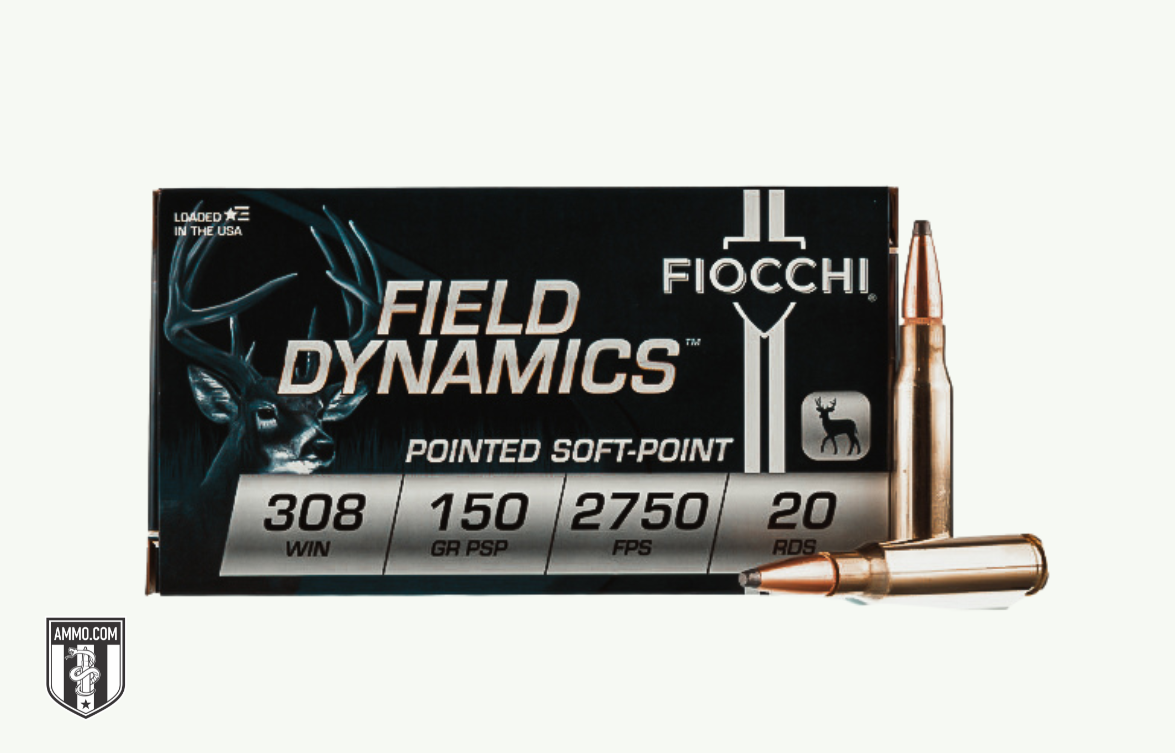
Hornady Custom Lite features a featherweight 124 grain SST bullet, which helps reduce recoil. It is an excellent round for recoil-sensitive shooters who are interested in firing the 308 Win. Federal Fusion Lite and Remington Managed Recoil are other good ammo choices for those leery of the 308’s recoil.
Installing a muzzle brake at the end of your barrel and replacing the butt pad on the stock with a more forgiving one will also make recoil more manageable, as well as help preserve your shoulder during an extended range session. In my experience (and according to many other shooters), LimbSaver makes good recoil pads, as do Magpul and FalconStrike. They’re not the only ones, but they’re the brands that immediately spring to mind when I’m in the market for a new recoil pad.
Combine all the abovementioned methods to experience maximum recoil reduction. If you still feel that 308 recoil is too much to manage, then it’s likely time to find a more recoil-friendly cartridge, such as the 243 Win.
Final Take: Is .308 a Good Choice for Recoil-Sensitive Shooters?
The 308 is not a good choice for recoil-sensitive shooters. When fired from a 9-pound rifle, it produces 13.5 to 15.2 ft-lbs of energy; around the 15 ft-lbs threshold where many shooters begin feeling discomfort.
Shooters set on a 30-caliber deer round with a little less push sometimes look to the 300 Savage, which trades ballistic performance for a slightly softer recoil impulse. Our 308 vs. 300 Savage comparison weighs that trade.
Subscribers Save Up to 15% on Ammo
Join hundreds of thousands of shooters getting first access to limited-time sales, price drops, and 2A news – delivered weekly. Private, no spam, one-click unsubscribe.