Wolf 9mm Ammo For Sale
-
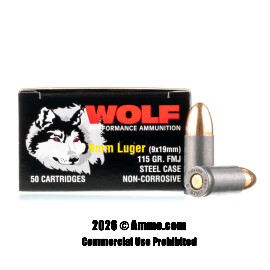
Wolf 9mm Ammo - 50 Rounds of 115 Grain FMJ Ammunition
 $15.99
44 In stock now
-


Overview of Wolf 9mm Ammo
Wolf 9mm is the budget-tier 9mm Luger ammunition in Wolf Ammunition's catalog – steel-cased, polymer-coated, bimetal-jacketed practice ammo built for shooters who burn through 9mm by the case and care more about cost-per-round than match accuracy or reloadability. It's not the round you'd carry for defense or stake a match on. It's the round you put through a Glock or M&P at the range on a Saturday when you want to shoot 400 rounds for what 100 rounds of premium brass-cased ammo would cost.
The product line in 9mm is dominated by the Wolf Polyformance 115gr FMJ – the standard steel-cased load, sold in 50-round boxes and 500/1,000-round cases. The brass-cased Wolf Gold line also offers a 9mm 115gr FMJ for shooters who want the cleaner-burning, reloadable case at a small price premium. Both run reliably through the major striker-fired duty pistols and most polymer-frame service guns, with the usual caveats that come with steel-cased pistol ammo.
The Steel Case + Bimetal Jacket Reality
What makes Wolf 9mm cheap is also what makes it polarizing. Three things shoppers should understand before buying:
- Polymer-coated steel cases, not brass. Steel doesn't expand and seal the chamber the way brass does, which produces slightly more carbon blowback and dirtier ammo over high round counts. The polymer coating is the modern replacement for the old lacquered cases (which earned the brand a reputation for gumming up chambers in the 2000s – that issue is solved). Cases are Berdan-primed and not practically reloadable.
- Bimetal jacket bullets. The projectile has a thin layer of steel beneath the copper jacket. This is not "armor piercing" – it doesn't penetrate body armor – but it is enough to set off the magnetic-pull detectors many commercial indoor ranges use to enforce "no steel ammo" rules. Confirm your range allows bimetal pistol ammo before buying Wolf 9mm in bulk for indoor practice.
- Slightly harder cycling. Steel cases don't grip the chamber walls the way brass does, which can produce snappier extraction and marginally faster wear on extractors over tens of thousands of rounds. For a hobbyist shooter putting a few hundred rounds a month through a Glock or M&P, this is a non-issue. For a high-round-count competition shooter, it matters.
Pistol Compatibility
Wolf 9mm runs reliably through the vast majority of modern striker-fired and hammer-fired 9mm pistols: Glock 17 / 19 / 26 / 43X / 48, Smith & Wesson M&P 9 / Shield Plus, SIG P320 / P226 / P229, CZ 75 / P-10 / Shadow, Beretta 92 / APX, HK VP9 / USP, Walther PDP / PPQ, Springfield XD / Hellcat, Ruger MAX-9 / SR9. The handful of pistols that get picky around steel-cased 9mm are typically tight-chambered custom 1911s, some target-grade competition pistols (Shadow 2 with tightened chambers, certain SP-01 builds), and a small number of older designs with sharp extractor geometry. If you're unsure, buy a box first and run it through your pistol before committing to a 500-round case.
When Wolf 9mm Makes Sense
- High-volume range practice. If you put 500+ rounds a month through a duty pistol, Wolf is the lowest-friction way to keep ammo costs in line with training volume.
- New shooter introduction. Affordable enough to let a beginner shoot 200 rounds in their first range session without breaking the bank.
- Pistol-caliber carbine practice. 9mm PCCs (Ruger PC Carbine, CZ Scorpion, Beretta CX4, AR-9 builds) chew through ammo – budget steel-cased rounds keep the per-trigger-pull cost reasonable.
- Bulk buying during stable market conditions. Wolf 9mm typically prices below the major US brass-cased budget brands (Blazer Brass, Magtech, Federal American Eagle) on a per-round basis. See our bulk 9mm ammo page for case pricing across all brands.
What Wolf 9mm Isn't Built For
- Concealed carry or home defense. Wolf 9mm in the catalog is FMJ only – no hollow points, no defensive expansion. For defensive 9mm, premium options like Federal HST, Speer Gold Dot, or Hornady Critical Defense are the right loads.
- Competition shooting at the upper levels. Steel cases and FMJ projectiles aren't engineered for the velocity consistency and power-factor precision that USPSA and IDPA shooters chase.
- Reloadable brass collection. Berdan primers and steel cases mean you won't be reloading Wolf 9mm cases for handloaded rounds.
- Ranges that prohibit bimetal pistol ammo. Confirm the rules before showing up with a case – some indoor ranges turn shooters away at the door over bimetal projectiles.
Where Wolf Ammunition Comes From Now
Historically Wolf-branded ammo was manufactured at the Tula Cartridge Plant in Russia. Following sanctions on Russian-origin ammunition imports, the Wolf brand pivoted to sourcing from a mix of global manufacturers including facilities in Taiwan, Serbia, and elsewhere. Quality control and SAAMI compliance remain consistent across the brand's product lines. The shift in country-of-origin doesn't change how Wolf 9mm shoots, but it does mean shoppers shouldn't be surprised when individual boxes list different headstamps depending on the production batch.
For Wolf's full catalog beyond 9mm – particularly the rifle calibers the brand is best known for (7.62x39, .223 Remington, 5.56x45) – see the parent Wolf Ammo brand page. For the broader 9mm caliber including premium and defensive options, browse our 9mm Luger page.