22 LR vs. 223 Remington: Rimfire Against Centerfire 22-Caliber Faceoff
When I was assigned to write this article, my initial thought was probably the same as your own. "22 LR vs. 223 Rem? It's a little strange to compare a rimfire to a centerfire cartridge, isn't it?"
But the more I thought about it, the more sense it made. The two rounds do share the same bullet diameter. You can fire either in a 5.56 AR-15 with minimal modification. They're both intensely popular. Yet despite these similarities, the two rounds have very different applications, ballistic performance, and stopping power.
Popular 22 Long Rifle Ammo Options & Uses
- Target Shooting: Eley Match 40 grain LFN
- Plinking: Remington Standard V 38 grain LRN
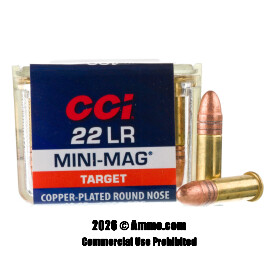
- Small Game Hunting: CCI Mini-Mag 36 grain CPHP; CCI 31 grain #12 Shot
- Self-Defense: Federal Punch 29 grain FN
Popular 223 Remington Ammo Options & Uses
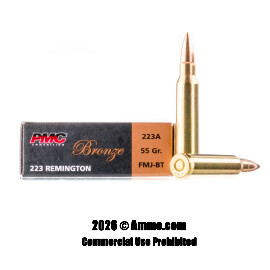
- Target Shooting: PMC Bronze 55 grain FMJBT
- Plinking: Federal American Eagle 75 grain TMJ
- Varmint Hunting: Winchester Varmint X 40 grain Polymer Tipped
- Home Defense: Hornady Critical Defense 73 grain FTX
22 LR vs. 223 Rem
| 22 LR Is Best For | 223 Rem Is Best For |
|---|---|
| Learning to shoot | Varmint hunting/ranch protection |
| Plinking | Plinking |
| Small game hunting | Learning to shoot |
| Backup personal defense | Backup home defense |
Cartridge Specs
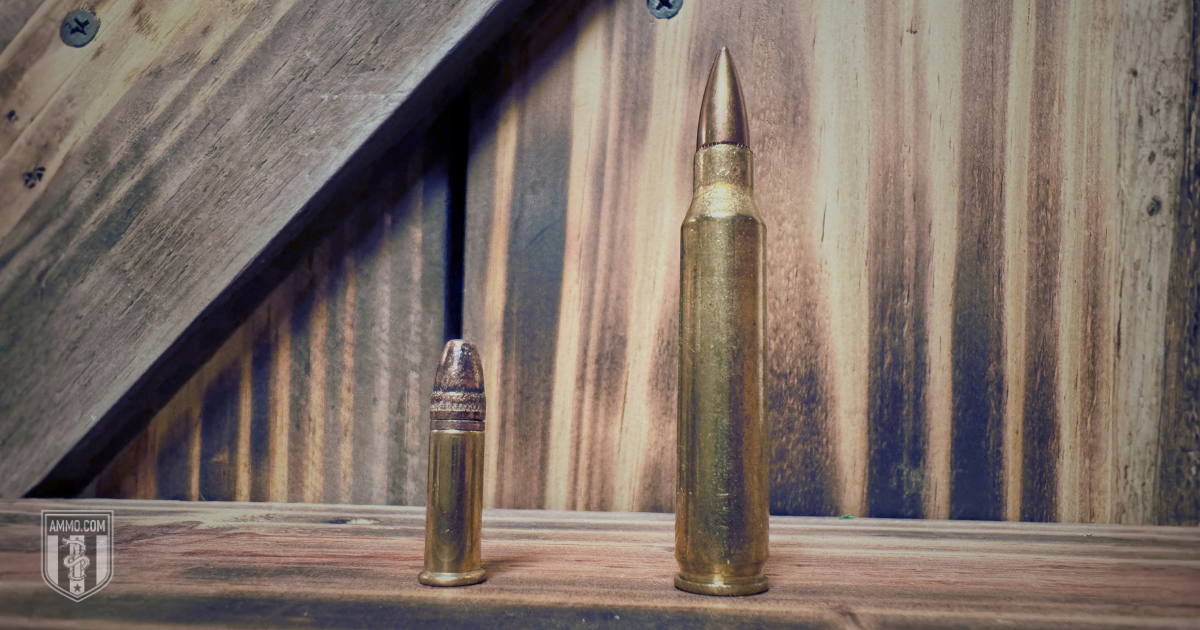
| 22 Long Rifle | 223 Remington | |
|---|---|---|
| Parent Case | 22 Long | 222 Rem |
| Bullet Diameter | 0.223" | 0.224" |
| Neck Diameter | 0.226" | 0.253" |
| Base Diameter | 0.226" | 0.376" |
| Case Length | 0.613" | 1.760" |
| Overall Length | 1.000" | 2.260" |
| Case Capacity | 10.5 grains H2O | 28.8 grains H2O |
| Max Pressure (SAAMI) | 24,000 psi | 55,000 psi |
Recoil

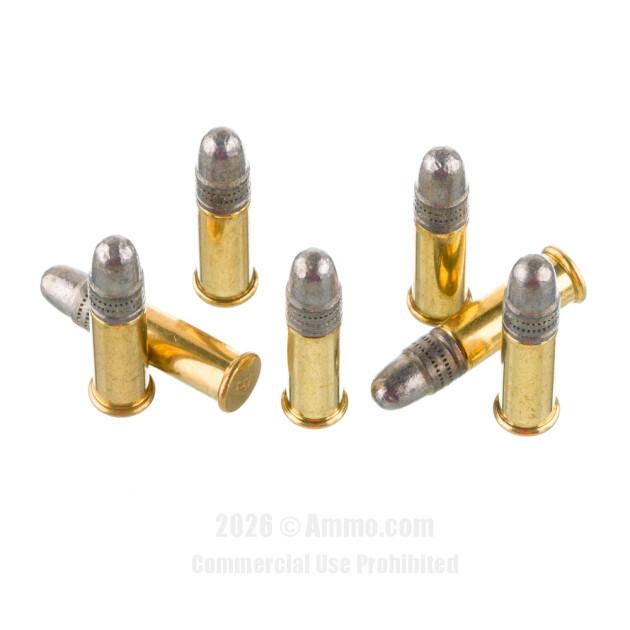
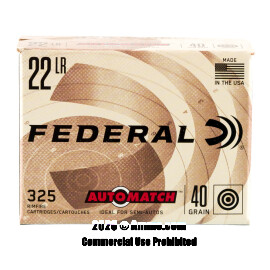
Federal AutoMatch 22 LR Ammo - 3250 Rounds of 40 Grain LRN Ammunition
13 In stock now
The 22 LR and 223 Rem have little recoil, making them excellent options for beginners who are learning proper shooting mechanics, as well as advanced shooters honing their craft. However, there is a drastic difference in recoil between the rimfire and centerfire cartridges.
Recoil is an important consideration when purchasing a new firearm (and cartridge). A round with heavy recoil is more difficult to control, and slows the rate of accurate follow-up shots.
Felt recoil is subjective. It varies from shooter to shooter, which is why we determine a cartridge's actual recoil by measuring its free recoil energy. It is determined by four factors: muzzle velocity, propellant charge weight, bullet weight, and firearm weight.
When fired from a 6 pound rifle at 1,255 fps muzzle velocity, a 40 grain 22 LR bullet generates ~0.19 ft-lbs of recoil energy. When a 62 grain 223 Rem bullet is fired from an 8 pound rifle at 3,025 fps muzzle velocity, it generates about 4 ft-lbs.
Despite this apparent large disparity, no one would argue that 223 Rem has high recoil. Anything under 15 ft-lbs is pretty manageable to most shooters. As one of the weakest cartridges, the 22 LR's recoil looks extremely low compared to pretty much anything.
Trajectory
The little 22 LR cartridge's bullet trajectory is satisfactorily flat over the short range it is intended for. The larger 223 Rem's trajectory is flatter to any distance, however, and makes long-range shots possible that the 22 LR cannot.
"Trajectory" describes a bullet's flight path over a given distance. Shooters can measure trajectory in inches of bullet drop, milliradians (MIL), and minute of angle (MOA). I used inches of drop in the following examples.
A flat-shooting cartridge is generally preferred for long-distance shooting because it requires fewer adjustments to compensate for bullet drop. It is also more forgiving of ranging mistakes.
The 22 LR is not a long-range cartridge. When zeroed at 50 yards, a 40 grain 22 LR bullet leaving the muzzle at 1,235 fps velocity will drop -5.8" at 100 yards, -45.0" at 200 yards, and a whopping -129.8" at 300 yards.
Here is a bullet drop chart to give you a general idea of the 22 LR's trajectory.
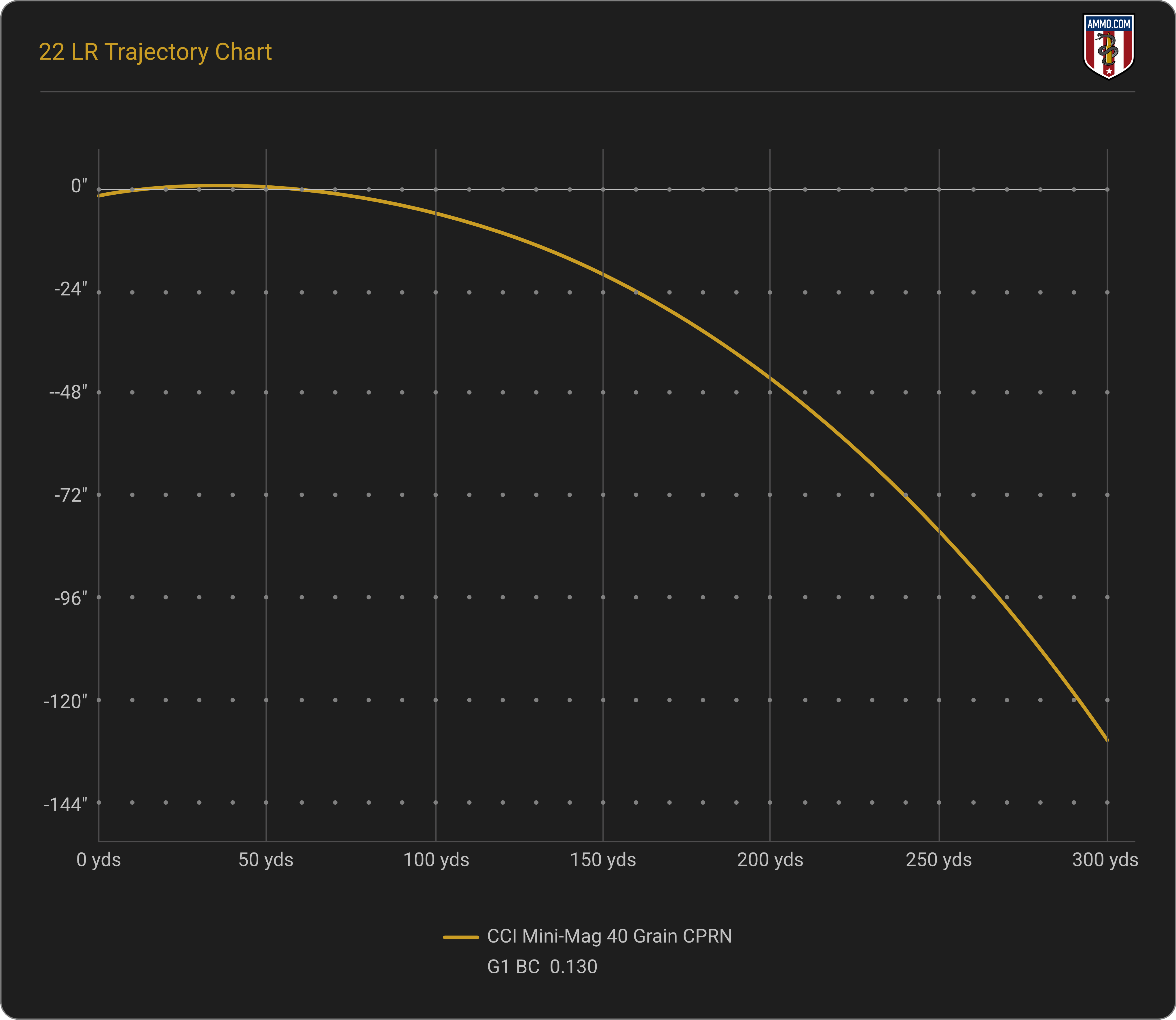
Note: The above chart shows the performance of one 22 LR load. Actual ballistic performance varies depending on bullet weight, lot number, barrel length, and environmental conditions.
When zeroed at the same range, a 40 grain 223 Rem bullet leaving the muzzle at 3,650 fps will rise 0.7" at 100 yards, drop -0.7" at 200 yards, and drop a mere -7.1" at 300 yards. Unsurprisingly, the 223 Remington has a much flatter trajectory than the 22 LR, making it the better choice for longer-range shooting.
Here is a bullet drop chart to give you a general idea of the 223 Rem's trajectory.
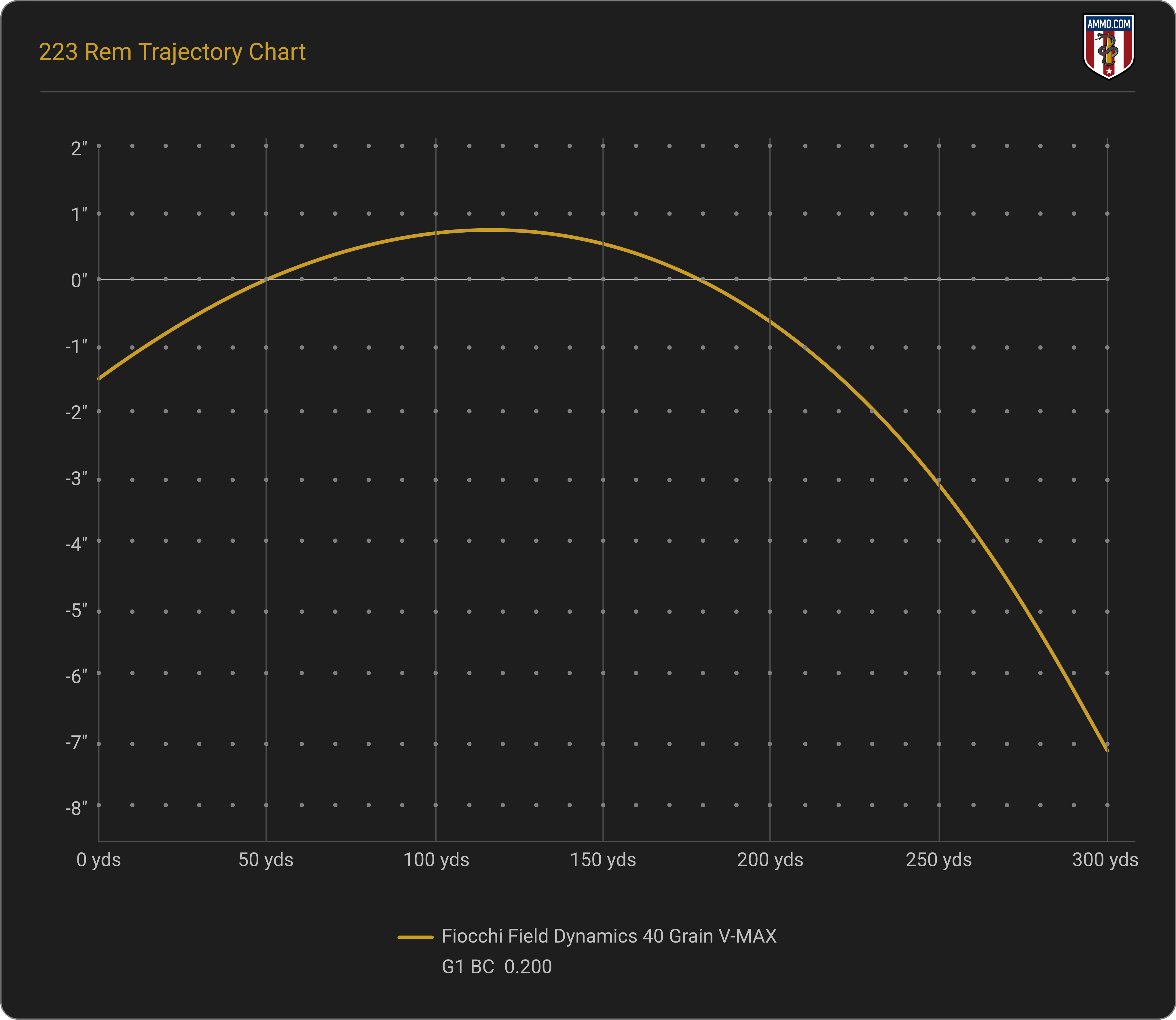
Note: The chart above shows the performance of one 223 Rem load. Actual ballistic performance varies depending on bullet weight, lot number, barrel length, and environmental conditions.
Accuracy
Accuracy is subjective; the sum of too many variables to calculate. The primary factor is the shooter, who cannot be measured completely. The firearm, the ammunition, and the environment also factor heavily into just how accurately one cartridge can perform.
Within 50 yards, the 22 LR and 223 Rem share similar accuracy. Firing the 22 LR beyond that range can prove very difficult for novice shooters. Conversely, few novices encounter any difficulty shooting past 50 yards the first time they pick up a 223 Rem rifle.
Even though the shooter experiences more recoil from the 223 Rem, it's rarely enough to affect their accuracy. The 223 Rem is the more accurate cartridge, generally speaking.
Stopping Power: 22 LR vs. 223 Rem Bullet Size
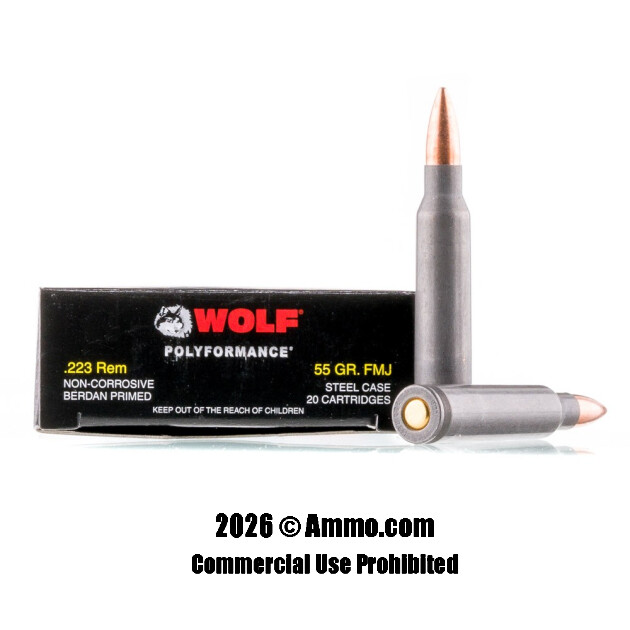

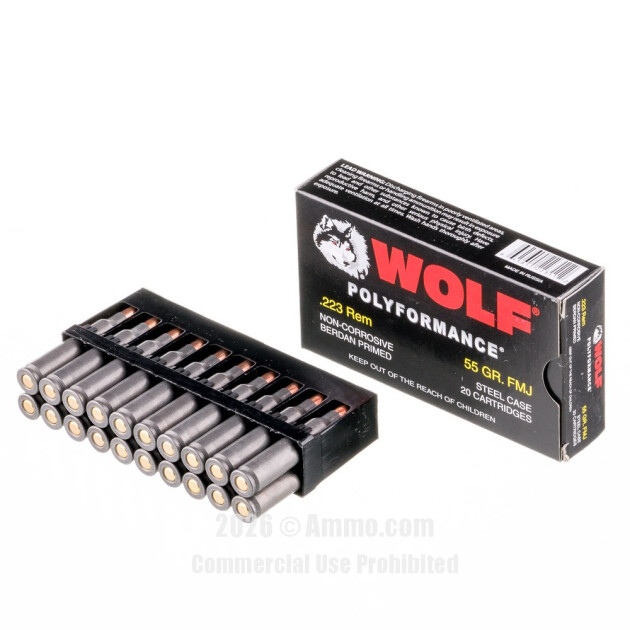

Wolf 223 Ammo - 500 Rounds of 55 Grain FMJ Ammunition
Out of stock
Once again, the 22 LR is outclassed by the larger cartridge. Despite firing projectiles of virtually identical diameter and potentially identical weight, the 22 LR cannot match the 223 Rem's kinetic energy.
A 42 grain 22 LR bullet leaving the barrel at 1,320 fps generates 162 ft-lbs of muzzle energy, and conserves 103 ft-lbs at 100 yards. A 38 grain 223 Rem bullet leaving the barrel at 3,800 fps generates 1,218 ft-lbs of muzzle energy, and conserves 814 ft-lbs at 100 yards. At 300 yards, the 38 grain 223 bullet conserves more energy (340 ft-lbs) than the 42 grain 22 LR bullet has at the muzzle (163 ft-lbs).
Hunting
The weaker 22 LR is limited to small game hunting. I love using it for squirrels and rabbits, but it often lacks the stopping power needed for an ethical kill on anything larger.
The 223 Rem is considered too powerful for small game, but excels at varmint hunting. I keep a 223 Rem rifle nearby for any coyotes that roam through my pasture.
The 223 Rem can certainly take down a whitetail with proper shot placement and within the appropriate range, although many states have deemed it too weak for that purpose and banned it on ethical grounds.
Home Defense
I'm not a fan of using a rifle for home defense. Rifle cartridges are more likely to overpenetrate than pistol cartridges or shotgun shells. However, when comparing only these two cartridges for defense, I'm grabbing my 223 Rem every time. It's more reliable (as centerfire primers generally are, compared to rimfire ones), and has greater stopping power than the 22 LR.
Ammo & Rifle Cost/Availability
22 LR rifles and ammo are less expensive than 223 Rem rifles and ammo. Both cartridges are extremely popular, and readily available (except during times of extreme shortage).
22 LR vs. 223 Rem Ballistics
22 LR ballistics differ greatly from those of 223 Rem, even though both fire .22 caliber bullets. Check out these tables comparing common loads!
22 LR Ballistics Table
Note: This information comes from ammo manufacturers. Actual ballistics obtained with your firearm can vary considerably from advertised ballistics. Also, ballistics can vary from lot to lot with the same brand and type load.
| Bullet | Barrel Length (in) | G1 BC | Velocity (fps) | Energy (ft-lbs) | Elevation (in) | |||||||||||||||
|---|---|---|---|---|---|---|---|---|---|---|---|---|---|---|---|---|---|---|---|---|
| 0yds | 25yds | 50yds | 100yds | 200yds | 300yds | 0yds | 25yds | 50yds | 100yds | 200yds | 300yds | 0yds | 25yds | 50yds | 100yds | 200yds | 300yds | |||
| Blazer 38gr LRN | 24 | 0.128 | 1235 | 1154 | 1089 | 993 | 870 | 780 | 129 | 112 | 100 | 83 | 64 | 51 | -1.5 | 0.1 | 0.0 | -5.8 | -45.2 | -130.6 |
| CCI Mini-Mag 40gr CPRN | 24 | 0.130 | 1235 | 1155 | 1091 | 996 | 873 | 784 | 135 | 119 | 106 | 88 | 68 | 55 | -1.5 | 0.1 | 0.0 | -5.8 | -45.0 | -129.4 |
| Winchester Xpert 42gr CPHP | 24 | 0.141 | 1320 | 1234 | 1160 | 1050 | 914 | 823 | 163 | 142 | 126 | 103 | 78 | 63 | -1.5 | 0.1 | 0.0 | -5.0 | -39.0 | -116.2 |
For load recommendations across target shooting, hunting, and self-defense, check out our guide to the best 22 LR ammo.
223 Rem Ballistics Table
Note: This information comes from ammo manufacturers. Actual ballistics obtained with your firearm can vary considerably from advertised ballistics. Also, ballistics can vary from lot to lot with the same brand and type load.
| Bullet | Barrel Length (in) | G1 BC | Velocity (fps) | Energy (ft-lbs) | Elevation (in) | |||||||||||||||
|---|---|---|---|---|---|---|---|---|---|---|---|---|---|---|---|---|---|---|---|---|
| 0yds | 25yds | 50yds | 100yds | 200yds | 300yds | 0yds | 25yds | 50yds | 100yds | 200yds | 300yds | 0yds | 25yds | 50yds | 100yds | 200yds | 300yds | |||
| Winchester Varmint X 38gr JHP | 24 | 0.158 | 3800 | 3616 | 3442 | 3113 | 2525 | 2006 | 1219 | 1104 | 1000 | 818 | 538 | 340 | -1.5 | -0.7 | 0.0 | 0.8 | -0.6 | -7.6 |
| Fiocchi Field Dynamics 40gr V-MAX | 24 | 0.200 | 3650 | 3509 | 3374 | 3117 | 2645 | 2219 | 1183 | 1094 | 1011 | 863 | 622 | 437 | -1.5 | -0.7 | 0.0 | 0.7 | -0.7 | -7.1 |
For a complete breakdown of velocity, energy, and trajectory across multiple bullet weights, visit our guide to 223 Rem ballistics. For load recommendations across plinking, varmint hunting, and home defense, check out our guide to the best 223 Rem ammo.
Parting Shots: 22 LR vs. 223 Remington
Both cartridges are excellent choices for learning proper shooting mechanics and form. While both fire .22 caliber bullets, they differ in many ways, making one or the other a better choice depending on the circumstances. The 223 Remington is the better choice in nearly every instance. The few scenarios the 22 LR is better for are plinking (as it is less expensive), small game hunting, and teaching recoil-sensitive shooters how to handle firearms.
No matter which you choose, Ammo.com has dozens of options for both cartridges with great prices, fast shipping, and excellent customer service!

-
PMC 223 Ammo - 1000 Rounds of 55 Grain FMJ Ammunition
 Save $39.00
$468.99
$429.99
66 In stock now
-
CCI 22 LR Ammo - 5000 Rounds of 40 Grain CPRN Ammunition
 $734.99
17 In stock now
-
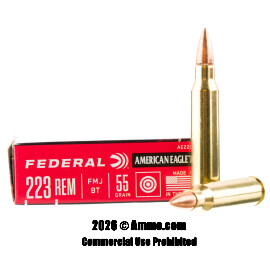
Federal 223 Ammo - 500 Rounds of 55 Grain FMJ-BT Ammunition
 Save $59.00
$288.99
$229.99
86 In stock now
-
Federal AutoMatch 22 LR Ammo - 3250 Rounds of 40 Grain LRN Ammunition
 $296.99
13 In stock now
Compare Ammo by Cartridge
190 head-to-head comparisons, grouped by platform. Find your cartridge, tap to open its matchups:
Handgun
23 cartridges
9mm 19
- .380 ACP vs 9mm
- 9mm vs 45 ACP
- 9mm vs 40 S&W
- .357 SIG vs 9mm
- 10mm vs 9mm
- 9mm vs 9mm Luger
- 9mm vs 40 vs 45
- 357 Magnum vs 9mm
- 5.7 vs 9mm
- 22 vs 9mm
- 9mm Makarov vs 9mm Luger
- 32 ACP vs 9mm
- 38 Special vs. 9mm
- 30 Super Carry vs. 9mm
- 5.56 vs 9mm
- .50 Action Express vs 9mm
- 7.62x25 vs. 9mm
- 38 Super vs. 9mm
- 25 ACP vs. 9mm
45 ACP 12
357 Magnum 7
44 Magnum 7
10mm 6
38 Special 5
25 ACP 2
32 ACP 2
357 SIG 2
454 Casull 2
30 Super Carry 1
38 S&W 1
45 GAP 1
460 Rowland 1
460 S&W 1
7.62x25 Tokarev 1
9mm Makarov 1
Rifle
58 cartridges
308 Winchester 18
- .308 vs 5.56
- 6.5 Creedmoor vs .308
- .300 Blackout vs .308
- .300 Win Mag vs .308
- .243 vs .308
- .308 vs .30-06
- 7mm-08 vs .308
- .270 vs .308
- 7.62x39 vs .308
- .223 vs .308
- .338 Lapua vs .308
- 6.5 Grendel vs .308
- 450 Bushmaster vs 308
- 277 Fury vs 308
- 300 PRC vs 308
- 7.62x39 vs 7.62x51
- 7.62x54r vs. 308 Winchester
- 300 Savage vs. 308 Win
223 Remington 17
- .223 vs .308
- .223 vs 5.56
- 300 Blackout vs 223
- 224 Valkyrie vs 223
- 22-250 vs 223
- 5.7x28 vs 223
- 450 Bushmaster vs 223
- 22 Hornet vs 223
- 204 Ruger vs 223
- 30 Carbine vs 223
- 350 Legend vs 223
- 277 Fury vs 223
- 243 Win vs 223 Rem
- 22 ARC vs. 223 Rem
- 22 LR vs. 223 Rem
- 6.5 Creedmoor vs. 223 Rem
- 223 Wylde vs. 223 Rem
5.56 NATO 17
6.5 Creedmoor 16
- 6.5 Creedmoor vs .308
- 6mm Creedmoor vs 6.5 Creedmoor
- 6.8 Western vs 6.5 Creedmoor
- 243 vs 6.5 Creedmoor
- 260 Remington vs 6.5 Creedmoor
- 28 Nosler vs 6.5 Creedmoor
- 6.8 SPC vs 6.5 Creedmoor
- 6.5x55 vs 6.5 Creedmoor
- 6.5 Creedmoor vs 270
- 6.5 Grendel vs 6.5 Creedmoor
- 6.5 PRC vs 6.5 Creedmoor
- 277 Fury vs 6.5 Creedmoor
- 300 PRC vs 6.5 Creedmoor
- 6.5 Creedmoor vs. 30-06 Springfield
- 6.5 Creedmoor vs. 300 Win Mag
- 6.5 Creedmoor vs. 223 Rem
300 Win Mag 13
- .300 Win Mag vs .308
- .300 Win Mag vs .30-06
- 300 Win Mag vs 338 Lapua
- 300 PRC vs 300 Win Mag
- 300 WSM vs 300 Win Mag
- 300 Win Mag vs 338 Win Mag vs 338 Lapua Mag
- 300 Win Mag vs 300 Norma
- 28 Nosler vs 300 Win Mag
- 7mm Rem Mag vs 300 Win Mag
- 277 Fury vs 300 Win Mag
- 300 Blackout vs 300 Win Mag
- 7mm PRC vs 300 Win Mag
- 6.5 Creedmoor vs. 300 Win Mag