6.5 Grendel vs. 5.56: Which AR Cartridge Is Better?
When it comes to the AR-15, there is no denying that the 5.56x45mm NATO is the king of the cartridges (that's why I own two of them). As it is standard issue ammo for the U.S. military and an incredibly potent varmint round, the 5.56 is by far the most popular centerfire rifle cartridge in North America.
Even though the 5.56 is a battle-proven round, some shooters wanted more out of their AR-15. More specifically, they wanted more power and range without having to upgrade to the heavier and more expensive AR-10 platform. Enter 6.5 Grendel, which gives shooters the range and stopping power they want out of their lightweight modern sporting rifles.
Is it worth it to upgrade your AR-15, or buy a new one in 6.5 Grendel? Or should you stick with the tried-and-true 5.56 NATO?
In this article, I will take a detailed look at the 6.5 Grendel vs. 5.56 and help you understand the advantages each rifle cartridge offers.
Subscribers Save Up to 15% on Ammo
What Is the Difference Between 6.5 Grendel and 5.56?
The primary differences between 6.5 Grendel and 5.56 are their bullet diameters and case designs.
Cartridge Specs
When evaluating two rifle cartridges, it's a good idea to begin by analyzing their specs.
| Spec | 6.5 Grendel | 5.56x45 NATO |
|---|---|---|
| Parent Case | 6.5mm PPC | 223 Remington |
| Bullet Diameter | 0.264 in | 0.224 in |
| Neck Diameter | 0.293 in | 0.253 in |
| Base Diameter | 0.439 in | 0.377 in |
| Case Length | 1.52 in | 1.76 in |
| Overall Length | 2.26 in | 2.26 in |
| Case Capacity | 35 grains | 28.5 grains |
| Max Pressure (SAAMI) | 52,000 psi | 55,114 psi |
The biggest difference between 5.56 and 6.5 Grendel is the bullet each cartridge fires. The 5.56 fires a 0.224" diameter bullet; the 6.5 Grendel, 0.264" (6.5mm). This disparity affects the bullet weights either cartridge can fire. 6.5 Grendel ammo typically fires bullets between 90 and 130 grains, with 100, 110, and 123 grain bullets being most popular. In contrast, the 5.56 fires bullets weighing between 35 and 77 grains, with 55 and 62 grain being the easiest to find for sale.
One striking difference between the two rifle cartridges is their case length and width. The 5.56 round is narrower and longer, with a base diameter of 0.377" and 1.76" case length. To contrast, the 6.5 has a base diameter of 0.439" and 1.52" case length.
The 5.56 and 6.5 Grendel share the same overall length: 2.26", which is the limit for standard NATO magazines.
Although the 5.56 case is longer, the 6.5 Grendel case's greater width gives it an edge in capacity. It holds 35.0 grains of H2O; 22.8% more than the 5.56 at 28.5 grains.
The final difference between the two cartridges is the amount of chamber pressure each can generate. The 5.56 is rated to handle the higher maximum average chamber pressure: 55,114 psi, as opposed to the 6.5 Grendel at 52,000 psi.
6.5 Grendel vs. 5.56 Recoil
Recoil is an important consideration when purchasing a new rifle, as a round with heavy recoil is more difficult to control and slows the rate of follow-up shots.
Free recoil energy is determined by four factors: muzzle velocity (measured in feet per second; fps), bullet weight, propellant charge weight, and rifle weight.
As the 6.5 Grendel fires heavier bullets than the 5.56, it also has more free recoil. The 5.56 generates an average of 4-4.5 ft-lbs of free recoil energy; the 6.5 Grendel, around 9 ft-lbs.
On paper, double the recoil might seem like a huge difference. However, most shooters would not consider the 6.5 Grendel's recoil oppressive by any stretch. Most shooters would have zero issues firing either cartridge all day at the range.


Hornady Frontier 5.56x45 Ammo - 20 Rounds of 55 Grain FMJ M193 Ammunition
36 In stock now
Muzzle Velocity and Kinetic Energy
| Cartridge & Bullet | Muzzle Velocity | Muzzle Energy |
|---|---|---|
| 5.56 NATO 55 grain FMJ | 3,240 fps | 1,282 ft-lbs |
| 6.5 Grendel 123 grain SST | 2,580 fps | 1,818 ft-lbs |
When it comes to muzzle velocity, only a handful of rounds are faster than the 5.56 NATO. Despite this, it cannot match the 6.5 Grendel in terms of muzzle energy.
For this example, we will compare two excellent Hornady rounds: Frontier 5.56 55 grain FMJ (M193 clone), and Custom 6.5 Grendel 123 grain SST.
At the muzzle, the 5.56 bullet begins blazing downrange at 3,240 fps. That's about 14% faster than the 6.5 Grendel bullet's 2,580 fps muzzle velocity. Although this is only one comparison, essentially every 5.56 factory load has a higher muzzle velocity than the 6.5 Grendel since it fires a lighter bullet.
However fast 5.56 bullets might be, the 6.5 Grendel's are heavier. They carry much more muzzle energy for it. At the muzzle, the 6.5 Grendel bullet attains bone-crushing 1,818 ft-lbs of kinetic energy; around 42% more than the 5.56 bullet's 1,282 ft-lbs muzzle energy.
The disparity between 5.56 and 6.5 Grendel's performance highlights the differences between the two rifle cartridges' design concepts.
The 5.56 NATO is a high-velocity, low-recoil round that relies on bullet fragmentation and hydrostatic shock to neutralize its target, whereas the 6.5 Grendel is designed to impart greater kinetic energy to the target via its heavier bullet.
It should also be noted that barrel length plays a significant role in muzzle energy and velocity, and manufacturers use different barrels to record ballistic data. Typically, 20" barrels are used for 5.56 ammo, while 24" barrels are used for 6.5 Grendel. If you prefer a shorter barrel on your AR-15 carbine, understand that ballistic performance will deviate from the numbers quoted above.
Trajectory
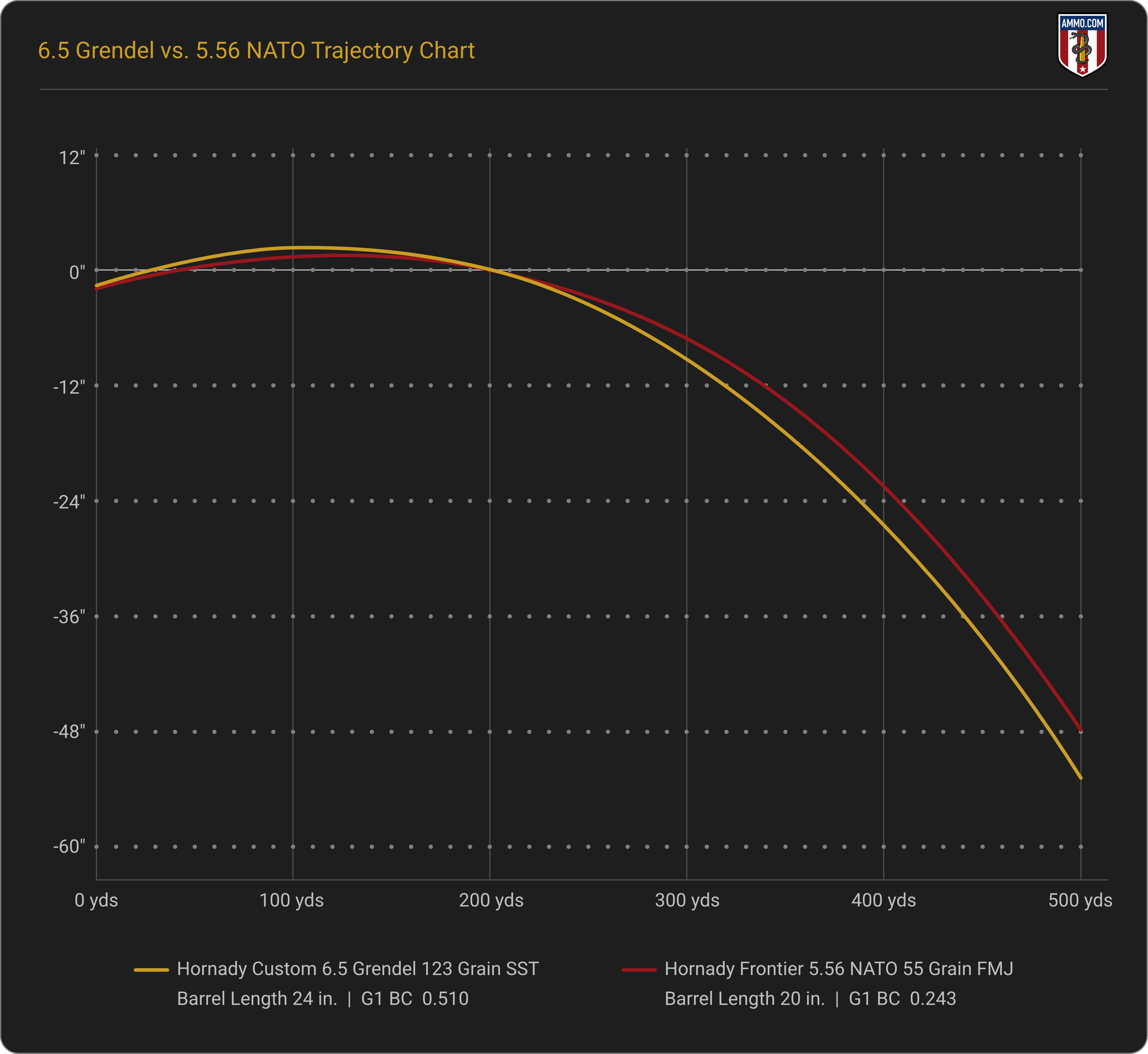
Trajectory is how we quantify a bullet's flight path as it travels downrange. For this article, it's measured in inches of bullet drop, but minutes of angle (MOA) and milliradians are other common ways of measuring a bullet's trajectory.
A flatter-shooting cartridge is preferable for long-range shooting, as it requires the shooter to make fewer adjustments to compensate for bullet drop. A flatter trajectory also indicates a cartridge will be more forgiving of ranging mistakes.
Of two Hornady factory loads in the previous section, the 5.56 will have a flatter trajectory than the 6.5 Grendel out to 700 yards (when zeroed at 200 yards). Its flat trajectory is primarily due to the 5.56's extremely high muzzle velocity. At 500 yards, the 5.56 exhibits around -48" bullet drop; the 6.5 Grendel, -53".
For the 5.56, 500 yards is generally considered the maximum effective range. The bullet dips below the recommended minimum 220 ft-lbs striking energy recommended for defense around this point.
Furthermore, the 5.56 will slow below subsonic velocity around 700 yards, at which point its accuracy suffers greatly.
On the other hand, the 6.5 Grendel bullet remains well above supersonic velocity at 700 yards, and can conserve over 220 ft-lbs of energy past 1,000 yards.
When it comes to long-range shooting past 600 yards, the 6.5 Grendel is clearly the better option. However, for shots under 600 yards, the 5.56 has a flatter trajectory and enough kinetic energy to neutralize a threat.
Ballistic Coefficient
Ballistic coefficient (BC) is a measure of how well a bullet resists wind drift and air resistance. Put another way, it's a numeric representation of how aerodynamic a bullet is. A high BC is preferred because it means the bullet will cut through the wind more easily.
Generally, heavier bullets have a higher BC because it takes more force to push them off their intended trajectories. Ballistic coefficient also varies from bullet to bullet based on design, as well as other factors that are beyond the scope of this article.
The 123 grain SST 6.5mm bullet has a G1 BC of 0.510. Even the sleek and relatively heavy 73 grain ELD Match 5.56mm only has a G1 BC of 0.398.
In terms of ballistic coefficient, the 6.5 Grendel is the clear winner.
Sectional Density
Sectional density (SD) is the measure of how well a bullet penetrates its target. The higher the number, the deeper the bullet can penetrate. SD is calculated by comparing the bullet's weight and diameter. It is a simplified view of penetration, as other factors such as impact velocity and terminal expansion also influence a bullet's potential for penetration.
The 6.5 Grendel dominates in penetration. Its heavier bullets' higher kinetic energy punches them deeper into the target.
Although the 5.56 focuses its velocity into a narrower frontal surface area, the 6.5 hits harder and penetrates deeper. The average sectional density for 6.5 Grendel is around 0.252, whereas the heaviest-hitting 5.56 73 grain ELD Match and 75 grain InterLock bullets only have SD around 0.210. The more common 55 grain bullets have an SD of 0.157.
The 6.5 Grendel is clearly the better option when deeper penetration is required, such as during big game hunting.



Hornady 6.5 Grendel Ammo - 20 Rounds of 123 Grain SST Ammunition
16 In stock now
Hunting
In terms of hunting, both rifle cartridges excel in their respective areas.
The 5.56 NATO is an awesome choice for varmint hunting, as its flatter trajectory makes it great for longer-range shots. However, the 5.56 often lacks the kinetic energy needed to ethically harvest larger game. Many states and provinces prohibit the use of 0.224" diameter bullets for deer hunting.
Large game hunting is where the 6.5 Grendel really shines, as its heavier bullets pack enough power to harvest deer or antelope out to around 400 yards. Although you could use the 6.5mm Grendel for varmint hunting, most varmint hunters prefer the 5.56's low recoil and lighter, flatter-flying bullets.
Technically, the 6.5 Grendel could take an elk within 100 yards if shot placement is perfect, though something along the lines of a 300 Winchester Magnum would be preferable for such large game.
The bottom line is that 5.56 is an excellent varmint cartridge, while the 6.5 is better for deer-sized game.
Cost/Availability
The popularity of the 5.56 really helps keep prices down and supply up. You can find 5.56 ammo virtually anywhere ammunition is sold.
Although the 6.5 Grendel is a very potent cartridge, it has not seen widespread adoption like the 5.56. This is in part due to poor marketing decisions at Alexander Arms, which kept the Grendel design trademarked and therefore delayed standardization by the Sporting Arms and Ammunition Manufacturers' Institute (SAAMI).
In terms of ammo variety, the 5.56 dominates the 6.5 Grendel to the tune of a 3:1 advantage.
Never forget! Buying in bulk is always smart. Make sure to check out our stock of 5.56 bulk ammo!
Inexpensive 5.56 FMJ ammo costs around $0.60/round. Match-grade ammo usually runs around the tune of $1.50/round and up, depending on bullet weight and manufacturer. PMC is a trusted, budget-friendly brand – check out our selection of PMC 5.56 ammo.
`For the 6.5 Grendel, "inexpensive" and "ammo" rarely go in the same sentence together. Wolf began offering steel-cased 6.5 Grendel ammo at around $1/round somewhat recently, but FMJ ammo by Hornady and Federal typically starts at around $1.60/round. As far as premium 6.5 Grendel hunting ammo is concerned, you should expect to pay no less than $2.20/round.
6.5 Grendel vs. 5.56 Ballistics
Ammo.com has scoured the internet to bring you comprehensive ballistics tables for both cartridges. Below are tables comparing bullet weight to muzzle velocity, kinetic energy, and trajectory for both 6.5 Grendel and 5.56.
6.5 Grendel Ballistics
For a complete breakdown of factory 6.5 Grendel loads by velocity, energy, and drop, visit our guide to 6.5 Grendel ballistics.
Note: This information comes from ammunition manufacturers. Actual ballistics obtained with your firearm can vary considerably from advertised ballistics. Also, ballistics can vary from lot to lot with the same brand and type load.
| Bullet | Barrel Length (in) | G1 BC | Velocity (fps) | Energy (ft-lbs) | Elevation (in) | |||||||||||||||
|---|---|---|---|---|---|---|---|---|---|---|---|---|---|---|---|---|---|---|---|---|
| 0yds | 100yds | 200yds | 300yds | 400yds | 500yds | 0yds | 100yds | 200yds | 300yds | 400yds | 500yds | 0yds | 100yds | 200yds | 300yds | 400yds | 500yds | |||
| Federal Varmint & Predator 90gr TNT | 24 | 0.260 | 3000 | 2642 | 2310 | 2004 | 1723 | 1475 | 1799 | 1395 | 1067 | 802 | 593 | 435 | -1.5 | 1.8 | 0.0 | -8.3 | -25.4 | -54.2 |
| Hornady Custom 90gr CX | 24 | 0.356 | 2910 | 2651 | 2406 | 2174 | 1955 | 1751 | 1693 | 1404 | 1157 | 945 | 764 | 613 | -1.5 | 1.8 | 0.0 | -7.8 | -22.9 | -47.2 |
| Hornady V-Match 100gr ELD-VT | 24 | 0.448 | 2730 | 2531 | 2340 | 2158 | 1984 | 1819 | 1655 | 1422 | 1216 | 1034 | 874 | 734 | -1.5 | 2.0 | 0.0 | -8.4 | -24.2 | -48.9 |
| Federal Fusion MSR 120gr Bonded SP | 24 | 0.340 | 2600 | 2346 | 2107 | 1883 | 1675 | 1487 | 1802 | 1467 | 1184 | 945 | 748 | 589 | -1.5 | 2.4 | 0.0 | -10.3 | -30.4 | -63.0 |
| Federal American Eagle 120gr OTM | 24 | 0.421 | 2610 | 2404 | 2207 | 2020 | 1842 | 1676 | 1815 | 1540 | 1298 | 1087 | 904 | 748 | -1.5 | 2.3 | 0.0 | -9.4 | -27.4 | -55.6 |
| Hornady Frontier 123gr FMJ | 24 | 0.420 | 2580 | 2375 | 2179 | 1992 | 1816 | 1651 | 1818 | 1540 | 1297 | 1084 | 901 | 745 | -1.5 | 2.4 | 0.0 | -9.7 | -28.2 | -57.2 |
| Hornady BLACK 123gr ELD Match | 24 | 0.506 | 2580 | 2409 | 2244 | 2086 | 1935 | 1790 | 1818 | 1585 | 1376 | 1189 | 1022 | 876 | -1.5 | 2.3 | 0.0 | -9.2 | -26.4 | -52.9 |
| Hornady Custom 123gr SST | 24 | 0.510 | 2580 | 2410 | 2247 | 2090 | 1939 | 1796 | 1818 | 1587 | 1379 | 1193 | 1027 | 881 | -1.5 | 2.3 | 0.0 | -9.1 | -26.3 | -52.7 |
| Remington Premier Match 130gr OTM | 24 | 0.560 | 2400 | 2251 | 2108 | 1970 | 1837 | 1711 | 1663 | 1463 | 1283 | 1120 | 975 | 846 | -1.5 | 2.7 | 0.02 | -10.5 | -30.0 | -59.8 |
5.56 NATO Ballistics
For shooters seeking comprehensive performance data across various barrel lengths and bullet weights, our in-depth 5.56 ballistics resource provides detailed trajectory and energy information beyond what this comparison covers. The following table summarizes factory ammunition performance.
Note: This information comes from ammo manufacturers. Actual ballistics obtained with your firearm can vary considerably from advertised ballistics. Also, ballistics can vary from lot to lot with the same brand and type load.
| Bullet | Barrel Length (in) | G1 BC | Velocity (fps) | Energy (ft-lbs) | Elevation (in) | |||||||||||||||
|---|---|---|---|---|---|---|---|---|---|---|---|---|---|---|---|---|---|---|---|---|
| 0yds | 100yds | 200yds | 300yds | 400yds | 500yds | 0yds | 100yds | 200yds | 300yds | 400yds | 500yds | 0yds | 100yds | 200yds | 300yds | 400yds | 500yds | |||
| Fort Scott Munitions 40gr TUI | 24 | 0.232 | 3962 | 3464 | 3020 | 2619 | 2252 | 1915 | 1394 | 1066 | 810 | 610 | 450 | 326 | -1.5 | 0.7 | 0.0 | -4.5 | -14.2 | -30.8 |
| Sellier & Bellot 55gr FMJ M193 | 23.5 | 0.259 | 3301 | 2916 | 2563 | 2236 | 1934 | 1660 | 1331 | 1039 | 803 | 611 | 457 | 337 | -1.5 | 1.3 | 0.0 | -6.6 | -20.3 | -43.3 |
| Winchester 62gr FMJ M855 | 20 | 0.344 | 3060 | 2783 | 2522 | 2276 | 2044 | 1827 | 1289 | 1066 | 876 | 713 | 575 | 459 | -1.5 | 1.5 | 0.0 | -7.0 | -20.7 | -42.8 |
| Hornady Frontier 68gr BTHP | 20 | 0.355 | 2960 | 2697 | 2449 | 2214 | 1993 | 1785 | 1323 | 1098 | 906 | 741 | 600 | 481 | -1.5 | 1.7 | 0.0 | -7.5 | -22.1 | -45.4 |
| Fort Scott Munitions 70gr TUI | 24 | 0.377 | 2874 | 2631 | 2400 | 2181 | 1974 | 1779 | 1284 | 1076 | 896 | 740 | 606 | 492 | -1.5 | 1.8 | 0.0 | -7.8 | -23.0 | -47.1 |
| Hornady Frontier 75gr BTHP | 20 | 0.355 | 2910 | 2650 | 2405 | 2172 | 1953 | 1748 | 1410 | 1170 | 963 | 786 | 635 | 509 | -1.5 | 1.7 | 0.0 | -7.8 | -22.9 | -47.3 |
| Winchester 77gr BTHP | 20 | 0.345 | 2750 | 2492 | 2248 | 2018 | 1803 | 1605 | 1293 | 1062 | 864 | 697 | 556 | 441 | -1.5 | 2.1 | 0.0 | -9.0 | -26.5 | -54.8 |
A Brief Design History of Both Cartridges
After the Korean War, the U.S. military started designing a new rifle cartridge for its frontline service rifles.
The 308 Winchester (7.62x51mm NATO) was adopted to fill this role in 1954.
After early engagements in Vietnam, the U.S. Army wanted a new rifle that fired a lighter, intermediate cartridge, like the AK-47's 7.62x39. This would allow soldiers to carry more ammo into battle while maintaining powerful, combat-effective terminal ballistics.
This was the beginning of the 223 Remington.
Development of the 223 Rem round began in 1957. The development of the 223 Remington cartridge was a joint operation organized by the U.S. Continental Army Command between Fairchild Industries, Remington Arms, and Eugene Stoner of Armalite. It used the 222 Remington as a parent cartridge.
Remington Arms submitted the final design to SAAMI in 1962.
The original 223 Rem Mil-Spec ammo adopted by the U.S. Military was designated "M193," and fired a 55 grain full metal jacket (FMJ) bullet at a muzzle velocity of 3,260 fps, with a muzzle energy of 1,294 ft-lbs.
The M193 cartridge served the U.S. Army throughout the Vietnam War; however, Fabrique Nationale Herstal changed the game several years later.
In 1980, the Belgian firearms and cartridge manufacturer submitted their design for the 5.56x45mm SS109 cartridge for NATO approval. It fired a 62 grain FMJ bullet with a steel penetrator tip at 3,110 fps muzzle velocity, with 1,325 ft-lbs muzzle energy.
The U.S. military would adopt FN Herstal's design, which it designated as "M855."
The 5.56mm NATO cartridge has identical external dimensions to the 223 Remington cartridge, although it can handle higher maximum pressure.
If you'd like to learn more about how the 5.56 compares to other cartridges, check out these articles:
Since the U.S. Armed Forces' adoption of the 5.56 NATO, critics have questioned the combat effectiveness and terminal ballistics of the .22 caliber round. In an attempt to bridge the gap between the 5.56 NATO and 308 Winchester, several intermediate cartridges have been adapted to the AR-15 platform, such as the 300 AAC Blackout and 6.8 SPC.
Bill Alexander developed the 6.5 Grendel (with help from competitive shooter Arne Brennan and Lapua senior ballistician Janne Pohjoispää) for this very reason. The British-American founder of Alexander Arms debuted his creation at the Blackwater's North Carolina training facility in May 2003.
The goal of the 6.5 Grendel's development had been an intermediate cartridge that extends the AR-15's effective range beyond 800 yards. Utilizing the same ballistically efficient 0.264" diameter bullets as the 6.5 Creedmoor, the 6.5 Grendel is capable of maintaining MOA-level accuracy and supersonic velocity out to 1,200 yards – with half the recoil of the 308 Win.
Descended from the 6.5mm PPC (which itself was derived from the 220 Russian), the 6.5 Grendel has a wider case head than the 5.56 NATO, and requires a non-standard AR-15 bolt and specialized magazine.
Widespread adoption of the 6.5 Grendel was somewhat hindered by Bill Alexander himself. He insisted the cartridge be trademarked, which disqualified it from being standardized by SAAMI. Eventually, Alexander Arms collaborated with Hornady to register the 6.5 Grendel with SAAMI in 2010. Their doing so allowed other manufacturers to produce and sell 6.5 Grendel ammunition, which greatly expanded the cartridge's reach.
With exceptional long-range capability, barrel life, and MOA-level accuracy, the 6.5 Grendel is an excellent choice if you're looking to upgrade your AR-15 platform to something that has a bit more stopping power than 5.56 NATO.
If you'd like to learn more about how the 6.5 Grendel compares to other cartridges, check out these articles:
- 6.5 Grendel vs. 308
- 6.5 Grendel vs. 6.5 Creedmoor
- 6.5 Grendel vs. 300 Blackout
- 6.5 Grendel vs. 6.8 SPC
- 6.5 Grendel vs. 6mm ARC
6.5 Grendel or 5.56: Which One Should You Choose?
When choosing between 5.56 vs. 6.5 Grendel for your next AR-15 or other modern sporting rifle, there are several factors to consider.
The 6.5 Grendel is an excellent choice for long-range shooting and medium-sized game hunting. Its 6.5mm bullet has excellent external and terminal ballistics, giving it a longer effective range than the 5.56 – at the cost of greater recoil and higher ammo prices.
The 5.56 NATO is an exceptional varmint round with a flat trajectory and lower recoil than the 6.5 Grendel, and at a lower cost per round.
Most shooters opt for the 5.56 NATO, as AR-15 rifles chambered for it are easy to find and inexpensive. If you go that route, PMC is one of the most trusted factory 5.56 brands – check out our selection of PMC 5.56 ammo.
However, if you need something for longer-range shots or want to hunt deer with your AR-15, the 6.5 Grendel is an excellent option.
Whichever cartridge you choose, make sure to get all of your ammo here at Ammo.com. I'll see you out on the range!
Subscribers Save Up to 15% on Ammo
Join hundreds of thousands of shooters getting first access to limited-time sales, price drops, and 2A news – delivered weekly. Private, no spam, one-click unsubscribe.

-
PMC 5.56x45 Ammo - 1000 Rounds of 62 Grain Penetrator Ammunition
 Save $52.00
$511.99
$459.99
80 In stock now
-
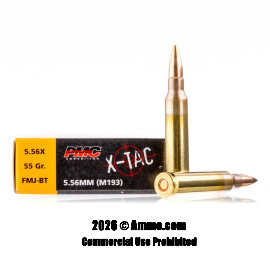
PMC 5.56x45 Ammo - 1000 Rounds of 55 Grain FMJ-BT Ammunition
 Save $40.00
$494.99
$454.99
70 In stock now
-
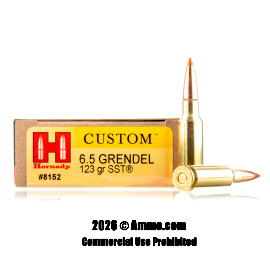
Hornady 6.5 Grendel Ammo - 200 Rounds of 123 Grain SST Ammunition
 $338.99
17 In stock now
-
Wolf Military Classic 6.5 Grendel Ammo - 20 Rounds of 100 Grain FMJ Ammunition
 $17.49
64 In stock now
-
Wolf Military Classic 6.5 Grendel Ammo - 500 Rounds of 100 Grain FMJ Ammunition
 $359.99
17 In stock now
-
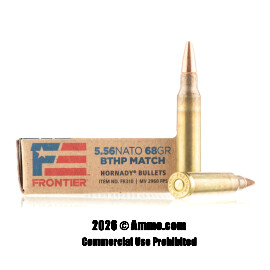
Hornady Frontier 5.56x45 Ammo - 500 Rounds of 68 Grain BTHP Match Ammunition
 $339.99
83 In stock now
-
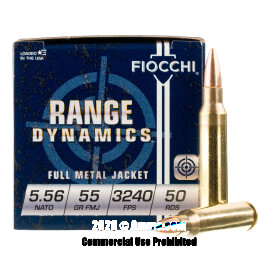
Fiocchi 5.56x45 Ammo - 1000 Rounds of 55 Grain FMJBT M193 Ammunition
 $569.99
6 In stock now
-
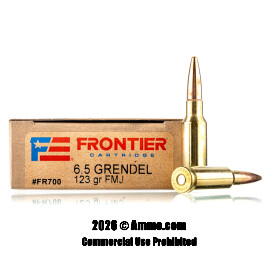
Hornady Frontier 6.5 Grendel Ammo - 20 Rounds of 123 Grain FMJ Ammunition
 $26.00
12 In stock now
-
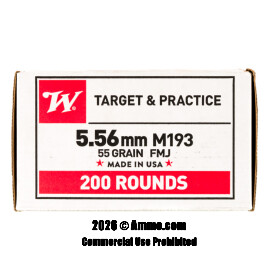
Winchester USA 5.56x45 Ammo - 200 Rounds of 55 Grain FMJ M193 Ammunition
 $109.99
91 In stock now
-
Winchester USA 5.56x45 Ammo - 800 Rounds of 55 Grain FMJ Ammunition
 $423.99
36 In stock now
-
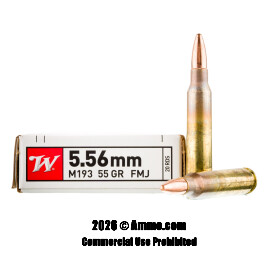
Winchester USA 5.56x45 Ammo - 1000 Rounds of 55 Grain FMJ M193 Ammunition
 $519.99
77 In stock now
-
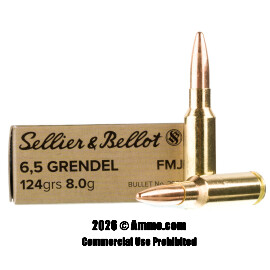
Sellier & Bellot 6.5 Grendel Ammo - 600 Rounds of 124 Grain FMJ Ammunition
 Save $25.00
$474.99
$449.99
74 In stock now
-
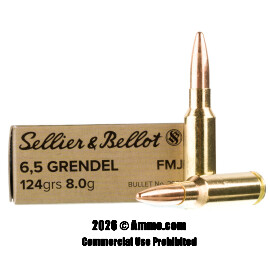
Sellier & Bellot 6.5 Grendel Ammo - 20 Rounds of 124 Grain FMJ Ammunition
 $19.99
87 In stock now
Compare Ammo by Cartridge
190 head-to-head comparisons, grouped by platform. Find your cartridge, tap to open its matchups:
Handgun
23 cartridges
9mm 19
- .380 ACP vs 9mm
- 9mm vs 45 ACP
- 9mm vs 40 S&W
- .357 SIG vs 9mm
- 10mm vs 9mm
- 9mm vs 9mm Luger
- 9mm vs 40 vs 45
- 357 Magnum vs 9mm
- 5.7 vs 9mm
- 22 vs 9mm
- 9mm Makarov vs 9mm Luger
- 32 ACP vs 9mm
- 38 Special vs. 9mm
- 30 Super Carry vs. 9mm
- 5.56 vs 9mm
- .50 Action Express vs 9mm
- 7.62x25 vs. 9mm
- 38 Super vs. 9mm
- 25 ACP vs. 9mm
45 ACP 12
357 Magnum 7
44 Magnum 7
10mm 6
38 Special 5
25 ACP 2
32 ACP 2
357 SIG 2
454 Casull 2
30 Super Carry 1
38 S&W 1
45 GAP 1
460 Rowland 1
460 S&W 1
7.62x25 Tokarev 1
9mm Makarov 1
Rifle
58 cartridges
308 Winchester 18
- .308 vs 5.56
- 6.5 Creedmoor vs .308
- .300 Blackout vs .308
- .300 Win Mag vs .308
- .243 vs .308
- .308 vs .30-06
- 7mm-08 vs .308
- .270 vs .308
- 7.62x39 vs .308
- .223 vs .308
- .338 Lapua vs .308
- 6.5 Grendel vs .308
- 450 Bushmaster vs 308
- 277 Fury vs 308
- 300 PRC vs 308
- 7.62x39 vs 7.62x51
- 7.62x54r vs. 308 Winchester
- 300 Savage vs. 308 Win
223 Remington 17
- .223 vs .308
- .223 vs 5.56
- 300 Blackout vs 223
- 224 Valkyrie vs 223
- 22-250 vs 223
- 5.7x28 vs 223
- 450 Bushmaster vs 223
- 22 Hornet vs 223
- 204 Ruger vs 223
- 30 Carbine vs 223
- 350 Legend vs 223
- 277 Fury vs 223
- 243 Win vs 223 Rem
- 22 ARC vs. 223 Rem
- 22 LR vs. 223 Rem
- 6.5 Creedmoor vs. 223 Rem
- 223 Wylde vs. 223 Rem
5.56 NATO 17
6.5 Creedmoor 16
- 6.5 Creedmoor vs .308
- 6mm Creedmoor vs 6.5 Creedmoor
- 6.8 Western vs 6.5 Creedmoor
- 243 vs 6.5 Creedmoor
- 260 Remington vs 6.5 Creedmoor
- 28 Nosler vs 6.5 Creedmoor
- 6.8 SPC vs 6.5 Creedmoor
- 6.5x55 vs 6.5 Creedmoor
- 6.5 Creedmoor vs 270
- 6.5 Grendel vs 6.5 Creedmoor
- 6.5 PRC vs 6.5 Creedmoor
- 277 Fury vs 6.5 Creedmoor
- 300 PRC vs 6.5 Creedmoor
- 6.5 Creedmoor vs. 30-06 Springfield
- 6.5 Creedmoor vs. 300 Win Mag
- 6.5 Creedmoor vs. 223 Rem
300 Win Mag 13
- .300 Win Mag vs .308
- .300 Win Mag vs .30-06
- 300 Win Mag vs 338 Lapua
- 300 PRC vs 300 Win Mag
- 300 WSM vs 300 Win Mag
- 300 Win Mag vs 338 Win Mag vs 338 Lapua Mag
- 300 Win Mag vs 300 Norma
- 28 Nosler vs 300 Win Mag
- 7mm Rem Mag vs 300 Win Mag
- 277 Fury vs 300 Win Mag
- 300 Blackout vs 300 Win Mag
- 7mm PRC vs 300 Win Mag
- 6.5 Creedmoor vs. 300 Win Mag