30-06 vs. 5.56: Hard-Hitting vs. High Velocity
The 30-06 vs. 5.56 comparison is interesting. The two rifle cartridges were designed for very different purposes, and therefore share very little in common.
Let’s discuss what makes these two rifle cartridges so different. We’ll judge their relative pros and cons, as well as their specs, ballistics, and hunting capabilities to help you decide which is the better option.
Overview of 30-06 and 5.56 Ammo


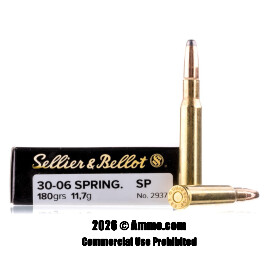
Sellier and Bellot 30-06 Ammo - 20 Rounds of 180 Grain SP Ammunition
57 In stock now
The .30-06 Springfield (aka 30-06 Springfield, 3006 Springfield, or 30-06) was designed to achieve a muzzle velocity of 2,700 fps and muzzle energy of 2,429 ft-lbs. The “.30” in its name designates its caliber; the “06” (pronounced “aught-six”) designates its year of adoption by the U.S. military (1906).
The 30-06 saw massive success on the battlefield and in the commercial market. 30-06 ammo has remained Americans' favorite de facto deer hunting cartridge for over a century. All others are measured against it.
Bullets for 30-06 commonly weigh between 110 and 220 grains, with 180 grains being the most popular among big game hunters.
The 5.56x45mm NATO has been the gold standard AR-15 cartridge since its adoption by the U.S. military in the 1960s. It has seen combat on five continents in the hands of the U.S. military and its NATO allies.
The 5.56 is a favorite among civilian shooters because 5.56 ammo is relatively inexpensive, has minimal recoil, and is accurate enough for many defensive, hunting, and competitive shooting applications.
Bullets for 5.56 commonly weigh between 50 grains and 77 grains, with 55 grains being the most sought after.
30-06 vs. 5.56 Pros and Cons
Over the years, I've taken both cartridges to the range and discovered benefits and drawbacks to each.
| 30-06 | 5.56 | ||
|---|---|---|---|
| Pros | Cons | Pros | Cons |
| ✓ Proven effective for hunting | ✗ Heavier recoil | ✓ Low recoil | ✗ Less than ideal stopping power for hunting |
| ✓ Excellent stopping power | ✗ Ammo is more expensive | ✓ Accurate | ✗ Can be difficult to find in times of high demand |
| ✓ Abundant ammo | — | ✓ Less expensive ammo | — |
| ✓ Wide range of civilian uses | — | ✓ Wide variety of ammo and bullets | — |
| ✓ Accurate in capable hands | — | ✓ Fun to shoot | — |
30-06 vs. 5.56 Specs
| 30-06 Springfield | 5.56x45mm NATO | |
|---|---|---|
| Parent Case | 30-03 Springfield | 223 Remington |
| Bullet Diameter | 0.308" | 0.224" |
| Neck Diameter | 0.340" | 0.253" |
| Base Diameter | 0.471" | 0.377" |
| Case Length | 2.494" | 1.760" |
| Overall Length | 3.340" | 2.260" |
| Case Capacity | 68 grains H2O | 28.5 grains H2O |
| Max Pressure | 60,000 psi (SAAMI) | 55,114 psi (SCATP 5.56) |
Ballistics Comparison: Velocity, Energy, and Bullet Drop
30-06 Ballistics
Note: The following table was created using data provided by ammo manufacturers. Actual ballistics obtained with your firearm can vary considerably from advertised ballistics. Also, ballistics can vary from lot to lot with the same brand and type load.
| Bullet | Barrel Length (in) | G1 BC | Velocity (fps) | Energy (ft-lbs) | Elevation (in) | |||||||||||||||
|---|---|---|---|---|---|---|---|---|---|---|---|---|---|---|---|---|---|---|---|---|
| 0yds | 100yds | 200yds | 300yds | 400yds | 500yds | 0yds | 100yds | 200yds | 300yds | 400yds | 500yds | 0yds | 100yds | 200yds | 300yds | 400yds | 500yds | |||
| 125gr PSP | 24 | 0.268 | 3140 | 2781 | 2449 | 2141 | 1856 | 1599 | 2,737 | 2,147 | 1,665 | 1,273 | 957 | 710 | -1.5 | 1.5 | 0.0 | -7.3 | -22.3 | -47.5 |
| 150gr FMJ | 24 | 0.314 | 2910 | 2617 | 2343 | 2085 | 1844 | 1624 | 2,821 | 2,281 | 1,828 | 1,448 | 1,133 | 878 | -1.5 | 1.8 | 0.0 | -8.2 | -24.4 | -50.9 |
| 165gr Core-Lokt Tipped | 24 | 0.447 | 2820 | 2616 | 2422 | 2235 | 2057 | 1888 | 2,914 | 2,508 | 2,149 | 1,831 | 1,551 | 1,306 | -1.5 | 1.8 | 0.0 | -7.7 | -22.4 | -45.4 |
| 180gr JSP | 24 | 0.385 | 2700 | 2470 | 2252 | 2046 | 1850 | 1668 | 2,914 | 2,440 | 2,028 | 1,673 | 1,369 | 1,113 | -1.5 | 2.1 | 0.0 | -9.0 | -26.3 | -53.9 |
To explore additional bullet weights, barrel lengths, and detailed trajectory data, visit our dedicated 30-06 ballistics resource.
5.56x45mm Ballistics
Note: The following table was created using data provided by ammo manufacturers. Actual ballistics obtained with your firearm can vary considerably from advertised ballistics. Also, ballistics can vary from lot to lot with the same brand and type load.
| Bullet | Barrel Length (in) | G1 BC | Velocity (fps) | Energy (ft-lbs) | Elevation (in) | |||||||||||||||
|---|---|---|---|---|---|---|---|---|---|---|---|---|---|---|---|---|---|---|---|---|
| 0yds | 100yds | 200yds | 300yds | 400yds | 500yds | 0yds | 100yds | 200yds | 300yds | 400yds | 500yds | 0yds | 100yds | 200yds | 300yds | 400yds | 500yds | |||
| 68gr BTHP | 20 | 0.355 | 2960 | 2697 | 2449 | 2214 | 1993 | 1785 | 1,323 | 1,098 | 906 | 741 | 600 | 481 | -1.5 | 1.7 | 0.0 | -7.5 | -22.1 | -45.4 |
| 70gr TUI | 24 | 0.377 | 2874 | 2631 | 2400 | 2181 | 1974 | 1779 | 1,284 | 1,076 | 896 | 740 | 606 | 492 | -1.5 | 1.8 | 0.0 | -7.8 | -23.0 | -47.1 |
| 75gr BTHP | 20 | 0.355 | 2910 | 2650 | 2405 | 2172 | 1953 | 1748 | 1,410 | 1,170 | 963 | 786 | 635 | 509 | -1.5 | 1.7 | 0.0 | -7.8 | -22.9 | -47.3 |
| 77gr BTHP | 20 | 0.345 | 2750 | 2492 | 2248 | 2018 | 1803 | 1605 | 1,293 | 1,062 | 864 | 697 | 556 | 441 | -1.5 | 2.1 | 0.0 | -9.0 | -26.5 | -54.8 |
For a more comprehensive breakdown of velocity, energy, and trajectory across different bullet weights and barrel lengths, check out our complete 5.56 ballistics guide.
Recoil and Shooting Experience
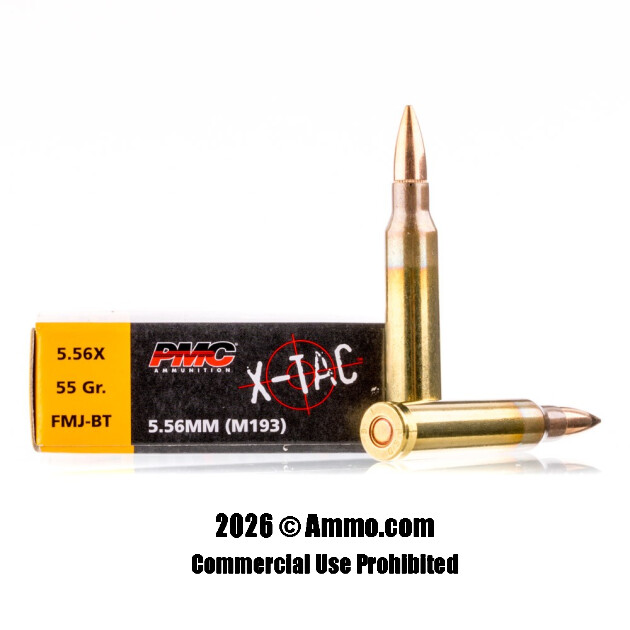
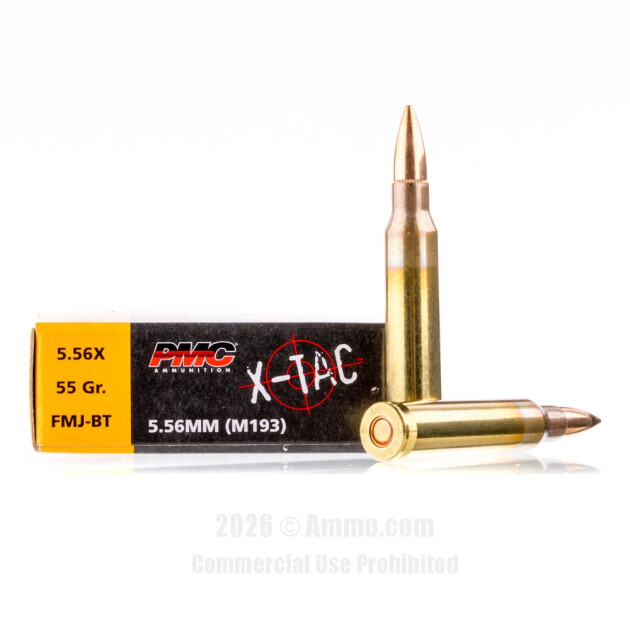
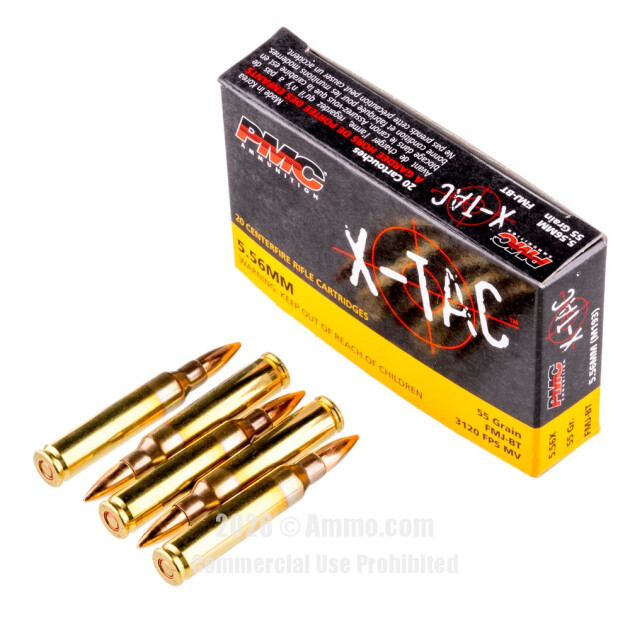
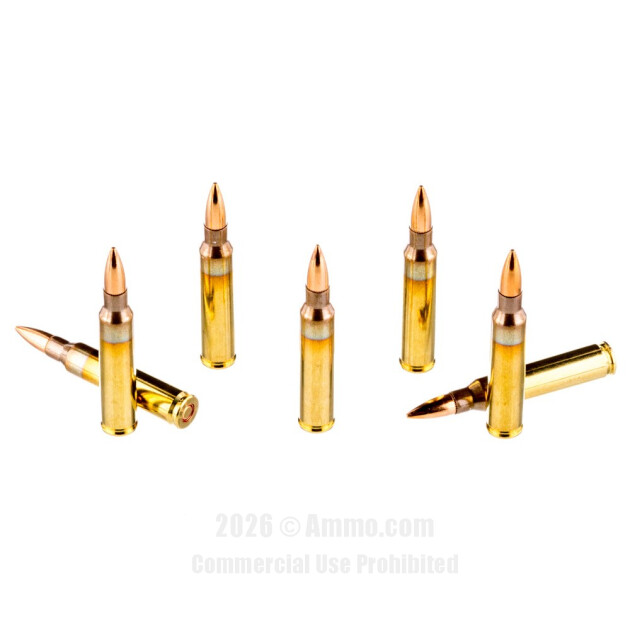
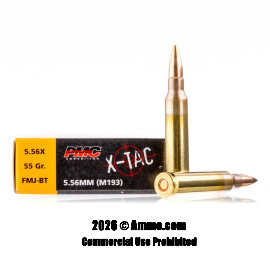
PMC 5.56x45 Ammo - 20 Rounds of 55 Grain FMJ Ammunition
72 In stock now
Unsurprisingly, the 30-06 has more recoil: 23 ft-lbs of free recoil energy when firing a 150 grain bullet from an 8-pound rifle. The 30-06 fires much heavier projectiles at high velocities, so it tends to be a shoulder thumper, but not unbearable.
The 5.56, on the other hand, has very little recoil: 5 ft-lbs of free recoil energy when firing a 55 grain bullet from a 7-pound rifle. The 5.56 is a much friendlier cartridge to beginners for that reason. I enjoy shooting my 5.56 rifles at the range more than I do my 30-06 ones because they're easier on my wallet and my shoulder.
Accuracy and Effective Range
The 5.56 is very accurate out to 250 yards, but in the hands of a well-trained and capable shooter, it can reach up to 600. The average shooter should expect 200 to 300 yards from their 5.56 rifle. Combining high-end match or hunting ammo with a longer barrel can help you increase your accuracy and effective range.
For most big game hunting applications, the 30-06 has an effective range of 300 yards. In the hands of a skilled long-distance shooter, it's accurate enough to reliably hit targets 1,000 yards away.
Penetration and Terminal Ballistics
Due to its bigger, heavier bullet, the 30-06 penetrates more effectively and inflicts a larger wound channel. This is why it can take down big game at several hundred yards.
The 5.56 can easily penetrate wood, drywall, and soft tissue – just not as well as the 30-06, due to its lighter bullets. Many 5.56 bullets will yaw (i.e. tumble) following impact, creating a larger wound channel as a result. Many others (especially FMJs) will fragment apart after impact instead.
Availability, Cost, and Shooting Platforms
Since both cartridges are popular among civilians, they are readily available and not crazy expensive. However, 30-06 ammo is considerably costlier than 5.56 ammo. The 30-06 offers a wider range of bullet weights, but both offer a vast array of bullet types.
For affordable, dependable 5.56, check out our selection of PMC 5.56 ammo.
The 30-06 is rarely chambered in anything other than bolt-action rifles (with the most notable exception being the M1 Garand), whereas the 5.56 is primarily chambered in the AR-15 platform (and some bolt-action rifles).
Which Is Better for Hunting?
The answer to "Which is better for hunting?" depends on your target quarry.
5.56 vs. 30-06 for Small Game
The 5.56 NATO is better for hunting small game, though neither cartridge is ideal for rabbits and squirrels.
5.56 vs. 30-06 for Coyotes
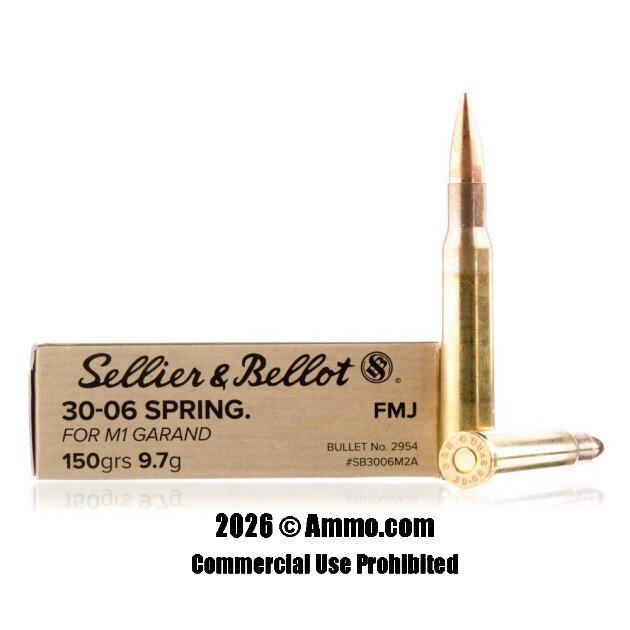

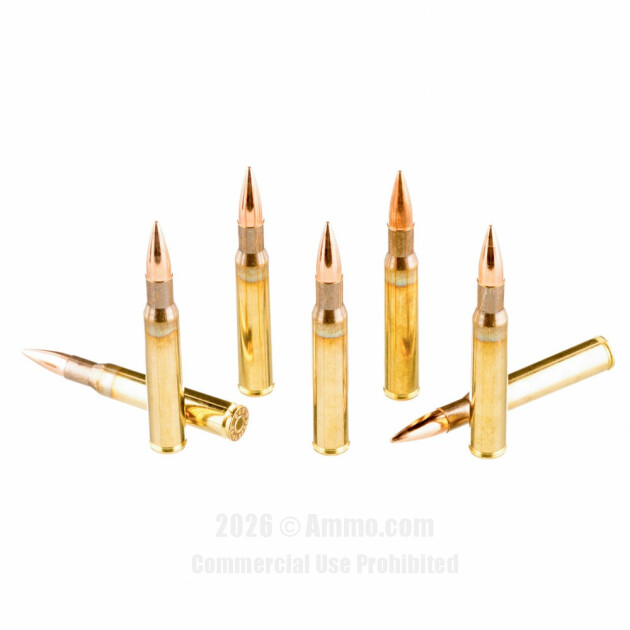
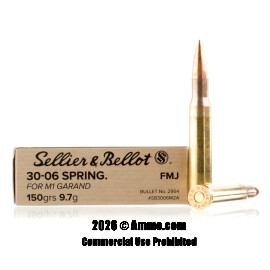
Sellier and Bellot 30-06 M1 Garand Ammo - 400 Rounds of 150 Grain FMJ Ammunition
67 In stock now
The 5.56 is better for hunting coyotes if you want to keep the pelts. However, the 30-06 allows hunters to shoot them from much farther away (at the expense of putting a much larger hole through the pelt).
5.56 vs. 30-06 for Hogs
I prefer a 30-06 for hog hunting because it has much more stopping power. However, the 5.56 can be effective against hogs at close range (within 100 yards).
5.56 vs. 30-06 for Deer
The 30-06 has been downing deer for decades, and will continue doing so for the foreseeable future. The 5.56 NATO is banned for deer hunting in many states, as it doesn't carry enough energy downrange to ethically harvest a deer without perfect shot placement.
Which Is Better for Self Defense?
The 5.56 is the better option for self-defense because it's readily available on the AR-15 platform (semi-automatic, with higher magazine capacity and rate of fire than a bolt-action rifle). The 5.56 also poses a lower risk of over-penetration than a 30-06.
Final Verdict: 30-06 vs. 5.56
If you need a hard-hitting round – capable of ethically harvesting deer, elk, and moose – then the 30-06 is the better choice. However, if you want a fun target-shooting or home-defense firearm, then the 5.56 is the way to go.
There's a good reason why both cartridges have remained top choices for so many shooters for so long: They're time-tested and proven to excel at their intended applications. Many have tried to create replacements for the 30-06 and 5.56, but they've yet to take away the rounds' top dog status.

-
Remington 30-06 Ammo - 200 Rounds of 180 Grain PSP Ammunition
 $309.99
19 In stock now
-
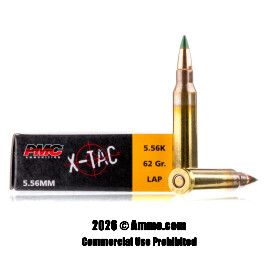
PMC 5.56x45 Ammo - 1000 Rounds of 62 Grain Penetrator Ammunition
 $511.99
77 In stock now
-
Sellier and Bellot 30-06 Ammo - 20 Rounds of 180 Grain SP Ammunition
 $20.99
57 In stock now
-
PMC 5.56x45 Ammo - 1000 Rounds of 55 Grain FMJ-BT Ammunition
 Save $40.00
$494.99
$454.99
94 In stock now
-
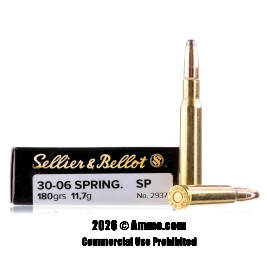
Sellier and Bellot 30-06 Ammo - 400 Rounds of 180 Grain SP Ammunition
 $399.99
18 In stock now
-
Sellier and Bellot 30-06 Ammo - 20 Rounds of 180 Grain SPCE Ammunition
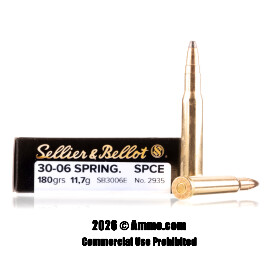 $20.99
95 In stock now
-
Prvi Partizan 30-06 Ammo - 500 Rounds of 150 Grain FMJ Ammunition in Ammo Can
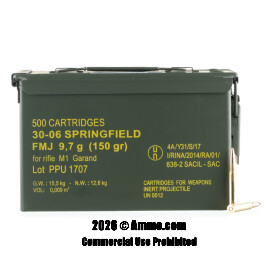 $599.99
71 In stock now
-
Prvi Partizan 30-06 M1 Garand Ammo - 200 Rounds of 150 Grain FMJ Ammunition
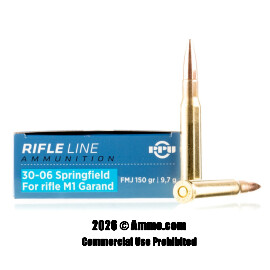 $244.99
95 In stock now
-
Sellier and Bellot 30-06 Ammo - 20 Rounds of 150 Grain FMJ Ammunition
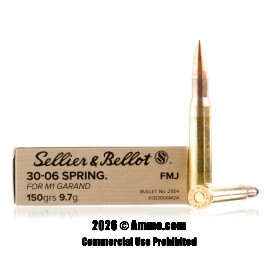 $22.49
128 In stock now
-
Sellier and Bellot 30-06 M1 Garand Ammo - 400 Rounds of 150 Grain FMJ Ammunition
 $439.99
67 In stock now
-
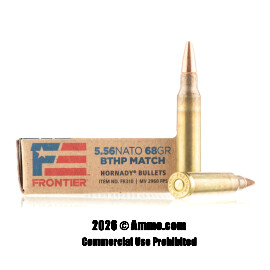
Hornady Frontier 5.56x45 Ammo - 500 Rounds of 68 Grain BTHP Match Ammunition
 $339.99
71 In stock now
-
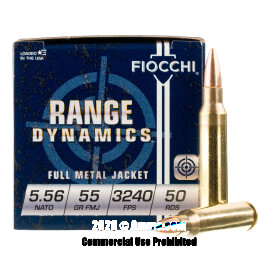
Fiocchi 5.56x45 Ammo - 1000 Rounds of 55 Grain FMJBT M193 Ammunition
 $569.99
11 In stock now
-
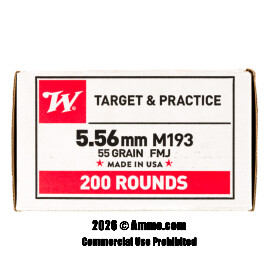
Winchester USA 5.56x45 Ammo - 200 Rounds of 55 Grain FMJ M193 Ammunition
 $109.99
92 In stock now
-
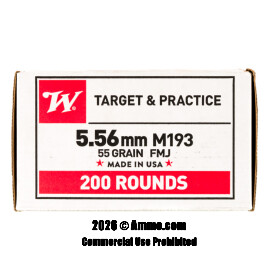
Winchester USA 5.56x45 Ammo - 800 Rounds of 55 Grain FMJ Ammunition
 $423.99
43 In stock now
-
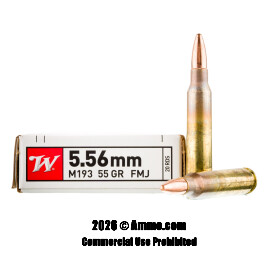
Winchester USA 5.56x45 Ammo - 1000 Rounds of 55 Grain FMJ M193 Ammunition
 $509.99
57 In stock now
-
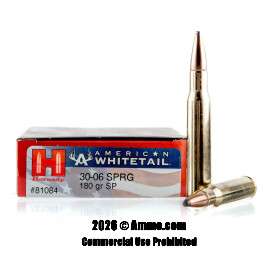
Hornady American Whitetail 30-06 Ammo - 200 Rounds of 180 Grain InterLock SP Ammunition
 $259.99
59 In stock now
-
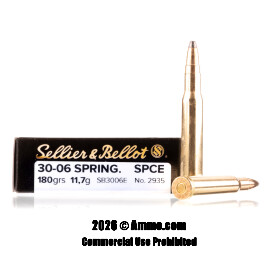
Sellier & Bellot 30-06 Ammo - 400 Rounds of 180 Grain SPCE Ammunition
 $399.99
13 In stock now
-
CBC (Magtech) 5.56x45 Ammo - 1000 Rounds of 55 Grain FMJ M193 Ammunition
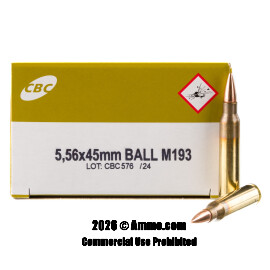 $449.99
11 In stock now
Compare Ammo by Cartridge
190 head-to-head comparisons, grouped by platform. Find your cartridge, tap to open its matchups:
Handgun
23 cartridges
9mm 19
- .380 ACP vs 9mm
- 9mm vs 45 ACP
- 9mm vs 40 S&W
- .357 SIG vs 9mm
- 10mm vs 9mm
- 9mm vs 9mm Luger
- 9mm vs 40 vs 45
- 357 Magnum vs 9mm
- 5.7 vs 9mm
- 22 vs 9mm
- 9mm Makarov vs 9mm Luger
- 32 ACP vs 9mm
- 38 Special vs. 9mm
- 30 Super Carry vs. 9mm
- 5.56 vs 9mm
- .50 Action Express vs 9mm
- 7.62x25 vs. 9mm
- 38 Super vs. 9mm
- 25 ACP vs. 9mm
45 ACP 12
357 Magnum 7
44 Magnum 7
10mm 6
38 Special 5
25 ACP 2
32 ACP 2
357 SIG 2
454 Casull 2
30 Super Carry 1
38 S&W 1
45 GAP 1
460 Rowland 1
460 S&W 1
7.62x25 Tokarev 1
9mm Makarov 1
Rifle
58 cartridges
308 Winchester 18
- .308 vs 5.56
- 6.5 Creedmoor vs .308
- .300 Blackout vs .308
- .300 Win Mag vs .308
- .243 vs .308
- .308 vs .30-06
- 7mm-08 vs .308
- .270 vs .308
- 7.62x39 vs .308
- .223 vs .308
- .338 Lapua vs .308
- 6.5 Grendel vs .308
- 450 Bushmaster vs 308
- 277 Fury vs 308
- 300 PRC vs 308
- 7.62x39 vs 7.62x51
- 7.62x54r vs. 308 Winchester
- 300 Savage vs. 308 Win
223 Remington 17
- .223 vs .308
- .223 vs 5.56
- 300 Blackout vs 223
- 224 Valkyrie vs 223
- 22-250 vs 223
- 5.7x28 vs 223
- 450 Bushmaster vs 223
- 22 Hornet vs 223
- 204 Ruger vs 223
- 30 Carbine vs 223
- 350 Legend vs 223
- 277 Fury vs 223
- 243 Win vs 223 Rem
- 22 ARC vs. 223 Rem
- 22 LR vs. 223 Rem
- 6.5 Creedmoor vs. 223 Rem
- 223 Wylde vs. 223 Rem
5.56 NATO 17
6.5 Creedmoor 16
- 6.5 Creedmoor vs .308
- 6mm Creedmoor vs 6.5 Creedmoor
- 6.8 Western vs 6.5 Creedmoor
- 243 vs 6.5 Creedmoor
- 260 Remington vs 6.5 Creedmoor
- 28 Nosler vs 6.5 Creedmoor
- 6.8 SPC vs 6.5 Creedmoor
- 6.5x55 vs 6.5 Creedmoor
- 6.5 Creedmoor vs 270
- 6.5 Grendel vs 6.5 Creedmoor
- 6.5 PRC vs 6.5 Creedmoor
- 277 Fury vs 6.5 Creedmoor
- 300 PRC vs 6.5 Creedmoor
- 6.5 Creedmoor vs. 30-06 Springfield
- 6.5 Creedmoor vs. 300 Win Mag
- 6.5 Creedmoor vs. 223 Rem
300 Win Mag 13
- .300 Win Mag vs .308
- .300 Win Mag vs .30-06
- 300 Win Mag vs 338 Lapua
- 300 PRC vs 300 Win Mag
- 300 WSM vs 300 Win Mag
- 300 Win Mag vs 338 Win Mag vs 338 Lapua Mag
- 300 Win Mag vs 300 Norma
- 28 Nosler vs 300 Win Mag
- 7mm Rem Mag vs 300 Win Mag
- 277 Fury vs 300 Win Mag
- 300 Blackout vs 300 Win Mag
- 7mm PRC vs 300 Win Mag
- 6.5 Creedmoor vs. 300 Win Mag