25 ACP vs. 9mm: Which Is Better for Modern Self-Defense & Shooting?
Despite both pistol cartridges dating back to the early 1900s, the 9x19mm Luger has thoroughly adapted to the modern world, while the 25 ACP has drifted to the fringes of obscurity. As you continue reading this 25 ACP vs. 9mm comparison, you'll discover why the 9mm is better for nearly every situation you'll encounter.
25 ACP vs. 9mm Ammo Picks
| Use Case | 25 ACP | 9mm |
|---|---|---|
| Self-Defense | Speer Gold Dot 35 grain JHP | Hornady Critical Defense 115 grain JHP |
| Training | Sellier & Bellot 50 grain FMJ | Federal Syntech Range 124 grain TSJ FN |
| Plinking | Prvi Partizan 50 grain FMJ | Remington UMC 115 grain FMJ |
25 ACP vs. 9mm
Cartridge Specs
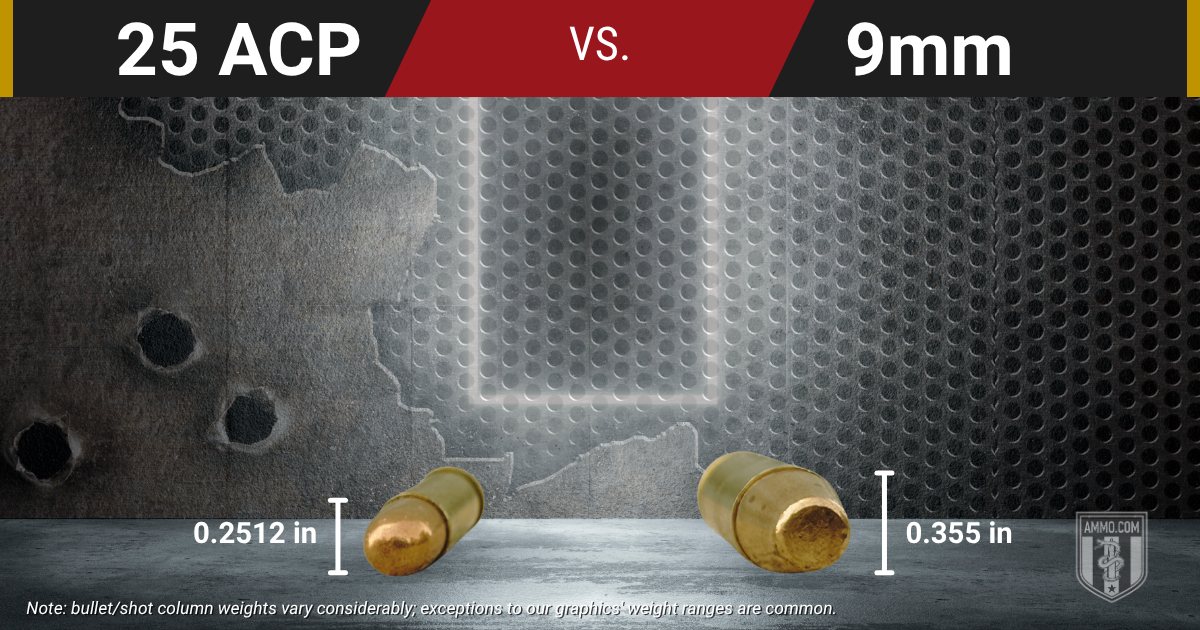
| 25 ACP | 9mm | |
|---|---|---|
| Parent Case | Original Design | 7.65x21mm |
| Bullet Diameter | 0.2512" | 0.355" |
| Neck Diameter | 0.276" | 0.380" |
| Base Diameter | 0.278" | 0.391" |
| Case Length | 0.615" | 0.754" |
| Overall Length | 0.910" | 1.169" |
| Case Capacity | 4.9 grains H2O | 13.3 grains H2O |
| Max Pressure (SAAMI) | 25,000 psi | 35,000 psi |
Recoil


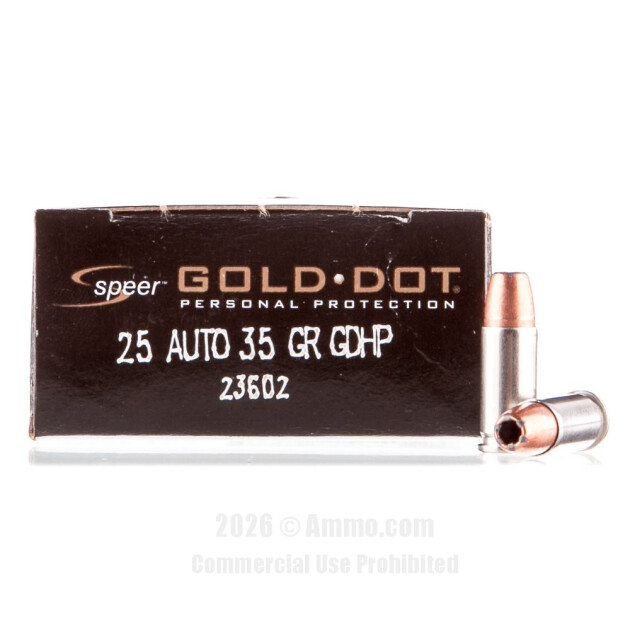


Speer 25 ACP Ammo - 20 Rounds of 35 Grain HP Ammunition
52 In stock now
Recoil is a critical consideration when purchasing a new self-defense handgun, as a cartridge with heavy recoil will be more challenging to control (and thus potentially less accurate) and slow your follow-up shots (which can be life-threatening when every split second counts). The potential for flinching (i.e. recoil anticipation) is also an issue with cartridges that deliver a powerful kick.
Felt recoil differs from shooter to shooter. Free recoil, however, is an objective measure of how hard a cartridge punches back based on firearm weight, muzzle velocity, powder charge weight, and bullet weight.
Both handgun rounds are known for having low recoil, but one has significantly less than the other. We'll compare two loads for reference.
For the 25 ACP, we'll fire a Federal American Eagle 50 grain cartridge with a muzzle velocity of 760 fps out of an 11.5 oz Beretta 950 Jetfire. Under these conditions, the 25 ACP generates ~1 ft-lb of free recoil.
For the 9mm, we'll fire a Winchester white box 115 grain cartridge with a muzzle velocity of 1,190 fps out of a 2 pound Glock 45. With these parameters, the 9mm produces ~4 ft-lbs of free recoil, which still isn't much.
In fewer words, the 25 ACP has about one-quarter as much recoil as the 9mm.
Accuracy
Cartridge accuracy depends on several factors, such as bullet design, firearm, shooter, and shooting conditions. That means this comparison can never be truly apples-to-apples. However, we can still help you decide whether the 9mm or 25 ACP might be more accurate for you.
A "mouse gun" chambered for 25 ACP is an excellent option for recoil-sensitive shooters. When I was a kid, my grandpa had a 25 Auto pistol that we would use for target shooting. It had such little recoil that I was reasonably accurate within 25 yards, even as a young teenager.
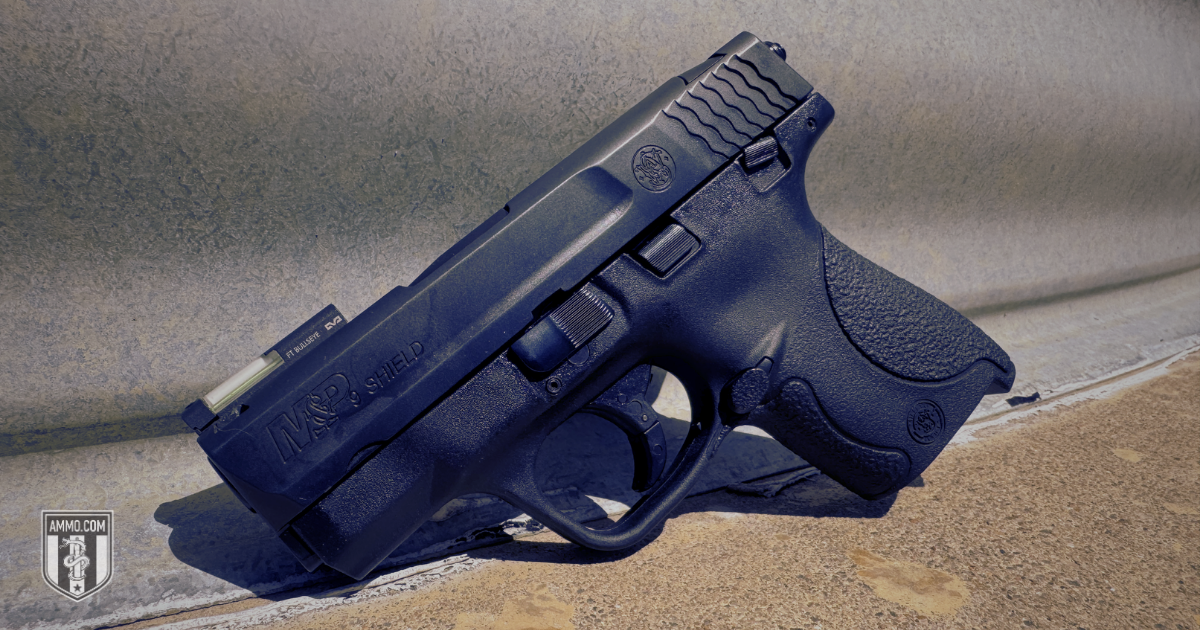
I often carry a 9mm Smith & Wesson Shield, and have accurate shot placement with it out to 25 yards. In the hands of a highly skilled shooter, the 9mm is better suited to longer shots. I've seen marksmen consistently hit targets at 100 yards with a 9mm (a feat only possible through substantial training).
This section is a draw. Some shooters will enjoy the benefits of the 25 ACP's lower recoil, while others will take advantage of the longer barrels (and range) of 9mm pistols. I recommend testing several high-quality factory loads to see which you prefer and your firearm handles best.
Stopping Power
There is no debate: the 9mm has much more stopping power than the 25 ACP. It fires wider, heavier bullets that hit harder and penetrate deeper. In other words, it inflicts a more injurious wound channel and transfers more energy to the target.
For reference, a 9mm 115 grain bullet leaving the barrel at 1,180 fps has 356 ft-lbs of muzzle energy, and conserves 281 ft-lbs at 50 yards (well past the average distance of most self-defense situations). A 50 grain 25 ACP bullet leaving the barrel at 825 fps has 68 ft-lbs of muzzle energy, and conserves only 60 ft-lbs at 50 yards.
No matter how you slice it, the 9mm is more powerful than the 25 ACP. Want to dig deeper into how bullet weight affects 9mm performance? Check out our guide to the best grain for 9mm.
Self-Defense


Hornady 9mm Ammo - 250 Rounds of 115 Grain FTX Ammunition
$265.00
$239.99
55 In stock now
The 9mm Luger is one of the most popular self-defense cartridges on the planet, for several reasons:
- Recoil is manageable for most CCWers
- Ammo is widely available and reasonably priced
- There are many different firearm options (so you can find the one that fits you perfectly)
- It offers plenty of stopping power for quickly neutralizing most threats.
The 25 ACP was originally designed for self-defense with pocket pistols. While initially popular, it is no longer a viable option for a primary self-defense firearm when there are so many better options available. However, the 25 ACP is still a decent option for a backup pistol. The small firearms chambered for it are easy to conceal and don't weigh much. If you're weighing the 25 ACP against other pocket-sized options, see our 25 ACP vs. 22 LR comparison.
One reason I wouldn't consider carrying a 25 ACP pistol is my negative experiences with my grandpa's old pistol. No matter how much we cleaned and lubed it or which ammo we used, it consistently jammed. I want something that's more reliable than what I've come to expect from a 25 ACP pistol.
The 9mm Luger is better for self-defense.
Ammo & Firearm Cost/Availability
You will rarely pay over $1,000 for a new 25 ACP pistol, and most will be under $400. On the other hand, a new 9mm pistol can cost as much as $1,500, but is generally around $800.
Ammo for a 25 ACP pistol isn't outrageously priced. It is more expensive than 9mm ammo, however, and 25 ACP firearm and ammo selection are both drastically limited compared to 9mm. If you shoot high volumes, bulk 9mm ammo is the most cost-effective way to keep the range bag full.
25 ACP vs. 9mm Ballistics
If you love digging into the ballistics of pistol ammo, then you'll love what's coming!
Note: This information comes from ammo manufacturers. Actual ballistics obtained with your firearm can vary considerably from advertised ballistics. Also, ballistics can vary from lot to lot with the same brand and type load.
25 ACP Ballistics
| Bullet | Barrel Length (in) | G1 BC | Velocity (fps) | Energy (ft-lbs) | Elevation (in) | ||||||||||||
|---|---|---|---|---|---|---|---|---|---|---|---|---|---|---|---|---|---|
| 0yds | 25yds | 50yds | 75yds | 100yds | 0yds | 25yds | 50yds | 75yds | 100yds | 0yds | 25yds | 50yds | 75yds | 100yds | |||
| Federal Premium 45gr JHP | 2 | 0.112 | 825 | 800 | 777 | 755 | 733 | 68 | 64 | 60 | 57 | 54 | -0.2 | 1.6 | 0.0 | -5.2 | -14.2 |
| Federal Premium 50gr FMJ | 2 | 0.113 | 760 | 739 | 718 | 698 | 679 | 64 | 61 | 57 | 54 | 51 | -0.2 | 1.9 | 0.0 | -6.1 | -16.6 |
9mm Ballistics
| Bullet | Barrel Length (in) | G1 BC | Velocity (fps) | Energy (ft-lbs) | Elevation (in) | ||||||||||||
|---|---|---|---|---|---|---|---|---|---|---|---|---|---|---|---|---|---|
| 0yds | 25yds | 50yds | 75yds | 100yds | 0yds | 25yds | 50yds | 75yds | 100yds | 0yds | 25yds | 50yds | 75yds | 100yds | |||
| Federal Premium 115gr FMJ | 4 | 0.123 | 1180 | 1107 | 1049 | 1002 | 963 | 356 | 313 | 281 | 257 | 237 | -0.2 | 0.8 | 0.0 | -2.8 | -7.7 |
| Winchester 124gr BEB | 4 | 0.184 | 1130 | 1086 | 1049 | 1017 | 988 | 352 | 325 | 303 | 285 | 269 | -0.2 | 0.8 | 0.0 | -2.8 | -7.7 |
| Remington 147gr BJHP | 4 | 0.185 | 990 | 964 | 941 | 920 | 900 | 320 | 304 | 289 | 276 | 264 | -0.2 | 1.1 | 0.0 | -3.5 | -9.6 |
Don't miss our thorough look at 9mm ballistics! For load recommendations across defense, training, and everyday carry, see our guide to the best 9mm ammo.
Parting Shots: 25 ACP vs. 9mm
It's clear why the 9mm continues to be one of the most popular pistol cartridges worldwide, especially over the 25 ACP. It's more powerful, exhibits better ballistic performance, and offers a wider selection of less costly ammo and more firearms to choose from. The 9mm has significantly more recoil than the 25 ACP, though it's still tame in the grand scheme of things.
I'll continue to choose 9mm Luger over any 25 ACP for every application. But if you're extremely recoil-sensitive or need a backup gun, the 25 ACP might be the better option.
Subscribers Save Up to 15% on Ammo
Join hundreds of thousands of shooters getting first access to limited-time sales, price drops, and 2A news – delivered weekly. Private, no spam, one-click unsubscribe.

-
Sellier and Bellot 45 ACP Ammo - 50 Rounds of 230 Grain FMJ Ammunition
 $21.99
40 In stock now
-
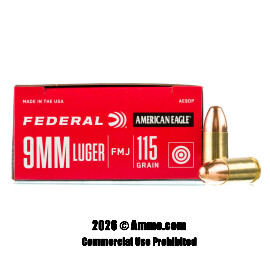
Federal 9mm Ammo - 1000 Rounds of 115 Grain FMJ Ammunition
 $299.99
74 In stock now
-
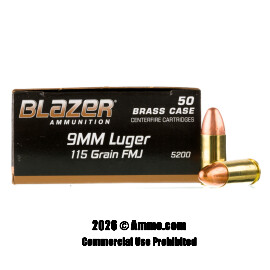
Blazer Brass 9mm Ammo - 1000 Rounds of 115 Grain FMJ Ammunition
 $273.99
68 In stock now
-
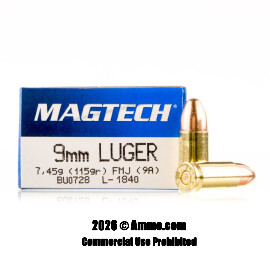
Magtech 9mm Ammo - 1000 Rounds of 115 Grain FMJ Ammunition
 $265.99
73 In stock now
-
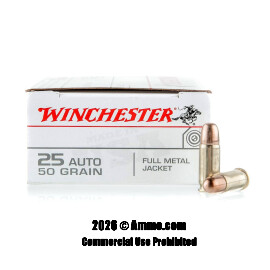
Winchester 25 ACP Ammo - 50 Rounds of 50 Grain FMJ Ammunition
 $26.99
27 In stock now
-
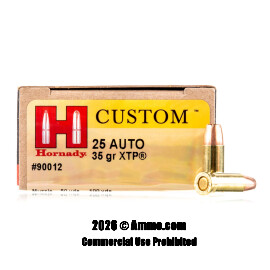
Hornady 25 ACP Ammo - 25 Rounds of 35 Grain JHP Ammunition
 $26.99
28 In stock now
-
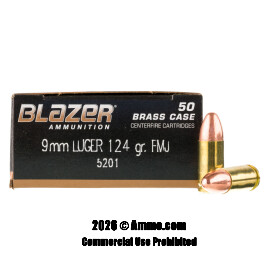
Blazer Brass 9mm Ammo - 1000 Rounds of 124 Grain FMJ Ammunition
 $285.99
60 In stock now
-
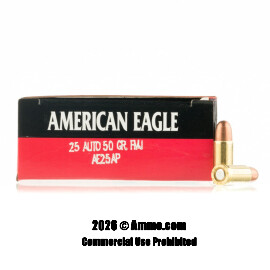
Federal 25 ACP Ammo - 50 Rounds of 50 Grain FMJ Ammunition
 $24.99
41 In stock now
-
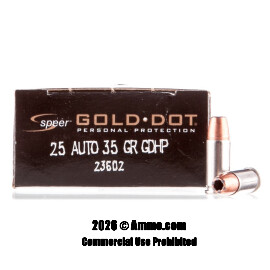
Speer 25 ACP Ammo - 20 Rounds of 35 Grain HP Ammunition
 $27.99
52 In stock now
-
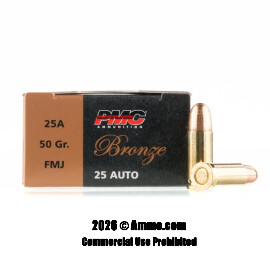
PMC 25 ACP Ammo - 50 Rounds of 50 Grain FMJ Ammunition
 $22.99
45 In stock now
-
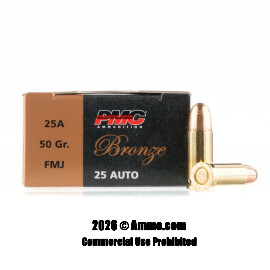
PMC 25 ACP Ammo - 1000 Rounds of 50 Grain FMJ Ammunition
 $409.99
4 In stock now
-
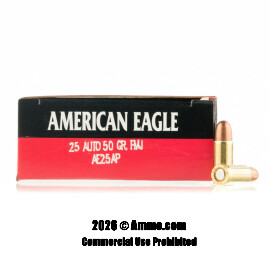
Federal 25 ACP Ammo - 1000 Rounds of 50 Grain FMJ Ammunition
 $459.99
4 In stock now
-
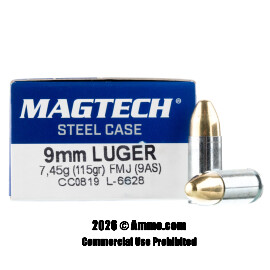
Magtech Steel 9mm Ammo - 1000 Rounds of 115 Grain FMJ Ammunition **STEEL CASES**
 $238.99
67 In stock now
Compare Ammo by Cartridge
190 head-to-head comparisons, grouped by platform. Find your cartridge, tap to open its matchups:
Handgun
23 cartridges
9mm 19
- .380 ACP vs 9mm
- 9mm vs 45 ACP
- 9mm vs 40 S&W
- .357 SIG vs 9mm
- 10mm vs 9mm
- 9mm vs 9mm Luger
- 9mm vs 40 vs 45
- 357 Magnum vs 9mm
- 5.7 vs 9mm
- 22 vs 9mm
- 9mm Makarov vs 9mm Luger
- 32 ACP vs 9mm
- 38 Special vs. 9mm
- 30 Super Carry vs. 9mm
- 5.56 vs 9mm
- .50 Action Express vs 9mm
- 7.62x25 vs. 9mm
- 38 Super vs. 9mm
- 25 ACP vs. 9mm
45 ACP 12
357 Magnum 7
44 Magnum 7
10mm 6
38 Special 5
25 ACP 2
32 ACP 2
357 SIG 2
454 Casull 2
30 Super Carry 1
38 S&W 1
45 GAP 1
460 Rowland 1
460 S&W 1
7.62x25 Tokarev 1
9mm Makarov 1
Rifle
58 cartridges
308 Winchester 18
- .308 vs 5.56
- 6.5 Creedmoor vs .308
- .300 Blackout vs .308
- .300 Win Mag vs .308
- .243 vs .308
- .308 vs .30-06
- 7mm-08 vs .308
- .270 vs .308
- 7.62x39 vs .308
- .223 vs .308
- .338 Lapua vs .308
- 6.5 Grendel vs .308
- 450 Bushmaster vs 308
- 277 Fury vs 308
- 300 PRC vs 308
- 7.62x39 vs 7.62x51
- 7.62x54r vs. 308 Winchester
- 300 Savage vs. 308 Win
223 Remington 17
- .223 vs .308
- .223 vs 5.56
- 300 Blackout vs 223
- 224 Valkyrie vs 223
- 22-250 vs 223
- 5.7x28 vs 223
- 450 Bushmaster vs 223
- 22 Hornet vs 223
- 204 Ruger vs 223
- 30 Carbine vs 223
- 350 Legend vs 223
- 277 Fury vs 223
- 243 Win vs 223 Rem
- 22 ARC vs. 223 Rem
- 22 LR vs. 223 Rem
- 6.5 Creedmoor vs. 223 Rem
- 223 Wylde vs. 223 Rem
5.56 NATO 17
6.5 Creedmoor 16
- 6.5 Creedmoor vs .308
- 6mm Creedmoor vs 6.5 Creedmoor
- 6.8 Western vs 6.5 Creedmoor
- 243 vs 6.5 Creedmoor
- 260 Remington vs 6.5 Creedmoor
- 28 Nosler vs 6.5 Creedmoor
- 6.8 SPC vs 6.5 Creedmoor
- 6.5x55 vs 6.5 Creedmoor
- 6.5 Creedmoor vs 270
- 6.5 Grendel vs 6.5 Creedmoor
- 6.5 PRC vs 6.5 Creedmoor
- 277 Fury vs 6.5 Creedmoor
- 300 PRC vs 6.5 Creedmoor
- 6.5 Creedmoor vs. 30-06 Springfield
- 6.5 Creedmoor vs. 300 Win Mag
- 6.5 Creedmoor vs. 223 Rem
300 Win Mag 13
- .300 Win Mag vs .308
- .300 Win Mag vs .30-06
- 300 Win Mag vs 338 Lapua
- 300 PRC vs 300 Win Mag
- 300 WSM vs 300 Win Mag
- 300 Win Mag vs 338 Win Mag vs 338 Lapua Mag
- 300 Win Mag vs 300 Norma
- 28 Nosler vs 300 Win Mag
- 7mm Rem Mag vs 300 Win Mag
- 277 Fury vs 300 Win Mag
- 300 Blackout vs 300 Win Mag
- 7mm PRC vs 300 Win Mag
- 6.5 Creedmoor vs. 300 Win Mag