6.5 Creedmoor vs. 223 Remington: Is a Flat Trajectory or Low Recoil Better?
The 6.5 Creedmoor crushes the 223 Remington in nearly every category. It has a flatter trajectory and more stopping power, making it the better rifle cartridge all around. Right?
Wrong. Although the 6.5 Creedmoor is more powerful, the 223 Rem hasn't remained the golden child among American marksmen for so many decades because it's so easily outclassed. It's just better suited to other applications.
Continue reading to discover what each rifle cartridge does differently, and whether upgrading to the more powerful 6.5 Creedmoor is worth it!
Popular 6.5 Creedmoor Ammo Options & Uses
- Competitive Shooting: Hornady Match 140 grain ELD Match
- Target Shooting: Federal American Eagle 120 grain OTM
- Hunting: Winchester Expedition Big Game 142 grain AccuBond LR
Popular 223 Remington Ammo Options & Uses
- Target Shooting: Black Hills 68 grain Heavy Match HP
- Plinking: Wolf 55 grain FMJ
- Varmint Hunting: Hornady Superformance Varmint 53 grain V-MAX
- Home Defense: Federal LE Tactical TRU 64 grain SP
6.5 Creedmoor vs. 223 Rem
Though they differ in size and function, the 6.5 Creedmoor and 223 Rem share some similarities. Let's begin understanding the performance differences by comparing either cartridge's specifications.
Cartridge Specs
| 6.5 Creedmoor | 223 Remington | |
|---|---|---|
| Parent Case | 30 Thompson Center | 222 Remington |
| Bullet Diameter | 0.264" | 0.224" |
| Neck Diameter | 0.295" | 0.253" |
| Base Diameter | 0.4703" | 0.376" |
| Case Length | 1.920" | 1.760" |
| Overall Length | 2.825" | 2.260" |
| Case Capacity | 52.2 grains H2O | 31.4 grains H2O |
| Max Pressure (SAAMI) | 62,000 psi | 55,000 psi |
Recoil
Most shooters agree that lighter recoil is better. The less recoil you experience, the more accurately you can shoot (with all other factors being equal). When shooting long-range matches or for extended periods, lighter recoil prevents fatigue. Also, the less your rifle beats against your shoulder, the less you will flinch and jerk the trigger while firing (i.e. recoil anticipation).
In terms of these two rounds' recoil, there is no contest. The 6.5 Creedmoor generates between ~12 and ~19 ft-lbs of free recoil energy depending on rifle weight and ammo. In contrast, the 223 Rem has between ~3 and ~4 ft-lbs of free recoil energy.
Despite generating at least three times the recoil of the 223 Rem, the 6.5 Creedmoor is still manageable for the average shooter. That's a large part of the reason why it's become so popular over the last couple of decades.
Even so, recoil-sensitive shooters will prefer the gentler ignition of the 223 Rem.
Trajectory
Trajectory is how we quantify a bullet's flight path as it travels downrange. It's measured in several ways, but in this article, we use inches of bullet drop.
A flatter-shooting cartridge is preferred for longer ranges, as fewer adjustments are required to compensate for bullet drop. A flatter trajectory also means a cartridge is more forgiving of ranging mistakes.
Looking at the ballistics tables below, we see that a 223 Rem 55 grain CX bullet exhibits about -35" drop at 500 yards when zeroed at 300 yards. In contrast, a 6.5 Creedmoor 120 grain CX bullet exhibits about -28" drop at 500 yards when zeroed at 300 yards. The difference between the two rounds' bullet drop increases even more dramatically over greater distances.
The 223 is well known for its flat trajectory and effective range of ~500 yards. The 6.5 Creedmoor offers shooters a much flatter trajectory, however, making it a preferred choice for long-distance shooting.
Accuracy
Many variables factor into a cartridge's accuracy. The shooter, firearm, bullet, trajectory, recoil, and atmospheric conditions all significantly contribute to the determination of accuracy. For the sake of the argument, we'll focus on trajectory and recoil and assume all other factors are as equal as possible.
Within 300 yards, the average shooter is more accurate with the 223 Rem due to its lower recoil. However, the poor trajectory of the 223 Rem past 500 yards means most shooters are more accurate using the 6.5 Creedmoor at longer distances.
Both cartridges are capable of extreme accuracy within the limits of their intended applications.
To get the most out of the 6.5 Creedmoor at distance, check out our guide to the best 6.5 Creedmoor ammo for accuracy.
Ballistic Coefficient
A bullet's ballistic coefficient (BC) measures how well it resists wind drift and frontal air resistance. Put another way, it's a numeric representation of a bullet's aerodynamic properties. A higher BC is preferred because it is indicative of a bullet that cuts through the air more efficiently.
BC varies from bullet to bullet based on design, weight, and other factors that are beyond the scope of this article. Generally speaking, heavy bullets have a higher BC because it takes more force to disrupt the flight of a heavier bullet than it does a lighter one.
6.5 Creedmoor bullets have remarkably high ballistic coefficients than 223 Rem bullets. This is largely because the 6.5 Creedmoor fires bullets that can be twice heavier (or more) than the 223's.
Some 6.5 Creedmoor bullets have BCs as high as 0.611. Most 6.5 Creedmoor bullets have a G1 BC between 0.428 and 0.646. Most 223 Rem bullets have a relatively low G1 BC, typically ranging between 0.202 and 0.362. The common 55 grain 223 Rem FMJ has a BC of 0.273.
6.5 Creedmoor bullets are much better at piercing the air and resisting wind drift, making them the better choice for long-range shooting.
Stopping Power


Hornady American Gunner 6.5 Creedmoor Ammo - 200 Rounds of 140 Grain BTHP Ammunition
$279.99
$239.99
70 In stock now
6.5 Creedmoor bullets generate and maintain more energy than smaller, lighter 223 Rem bullets. The 6.5 Creedmoor has significantly more stopping power as a result, making it a better option for medium and big game at long range. However, the 6.5 Creedmoor is widely considered to be too much for small game hunting, as well as for home defense.
A 77 grain 223 Rem bullet leaving the muzzle at 2,720 fps generates 1,265 ft-lbs of muzzle energy and maintains 467 ft-lbs at 500 yards. A 120 grain 6.5 Creedmoor bullet leaving the muzzle at 3,050 fps generates 2,479 ft-lbs of muzzle energy and maintains 1,100 ft-lbs at 500 yards.
The 223 Rem is no match for the 6.5 Creedmoor in terms of stopping power.
Barrel Life
Most hunters and shooters will never shoot their barrels out. But competitive shooters, who fire thousands of rounds per year, will. The 223 Rem has a drastically longer barrel life than the 6.5 Creedmoor, often lasting between 10,000 and 20,000 rounds as opposed to 2,000 to 3,000.
It's pretty clear that you'll be swapping barrels regularly when firing thousands of 6.5 Creedmoor rounds.
6.5 Creedmoor vs. 223 Remington for Hunting
The 223 Rem and 6.5 Creedmoor are both effective hunting cartridges in their own rights. The 223 Rem is underpowered for deer hunting and overpowered for small game. The 6.5 Creedmoor excels at deer, pronghorn, and black bear hunting.
For load recommendations across game types, see our guide to the best 6.5 Creedmoor hunting ammo.
Hog Hunting
The 6.5 Creedmoor has more than enough stopping power to drop big boar in their tracks, but the ammo is much more expensive. If you're shooting hogs in high volumes, more affordable 223 Rem ammo might be the better option.
Deer Hunting
Many hunters looked down on the 6.5 Creedmoor upon its release, especially those who love hunting with the 30-06 or 308. Most hunters now agree that the 6.5 Creedmoor is a good option for deer hunting, for which it is much more viable than the 223 Rem. In many states, the 223 Rem is outlawed for deer hunting because it doesn't retain enough energy for an ethical harvest beyond 100 yards.
Home Defense
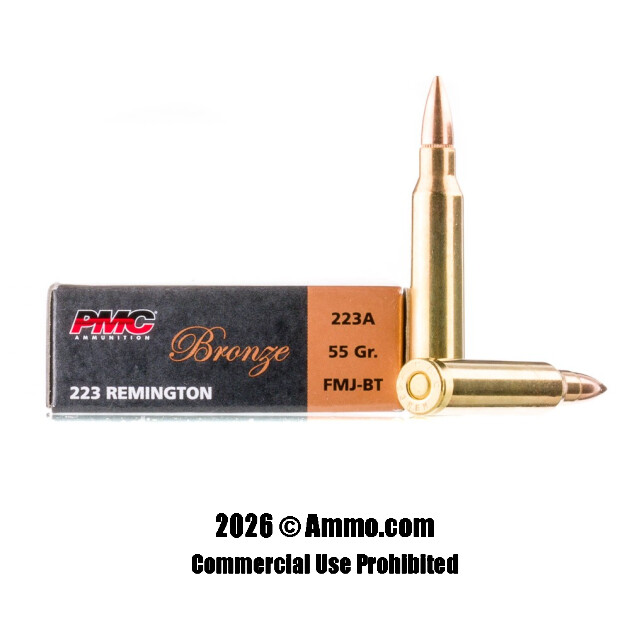

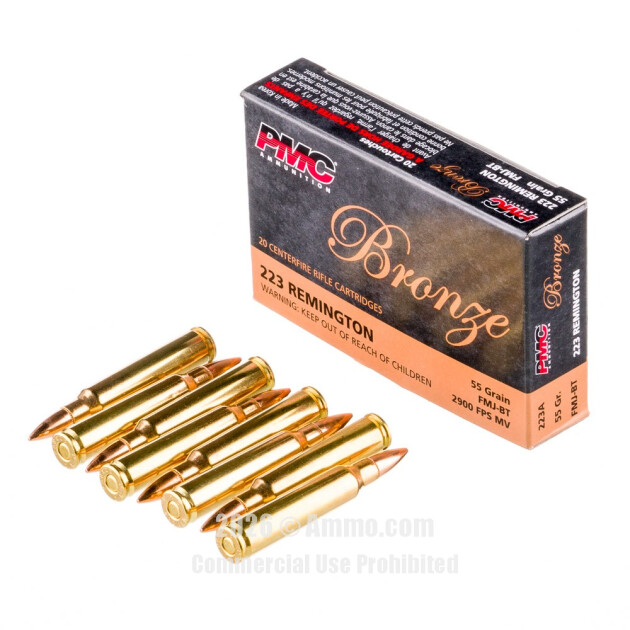

PMC 223 Ammo - 1000 Rounds of 55 Grain FMJ Ammunition
$468.99
$429.99
85 In stock now
I'm not a fan of using a rifle cartridge for home defense because of the higher likelihood of overpenetration. If I were forced to choose between the 6.5 Creedmoor and 223 Rem, I'd choose the 223 Rem. It has a lower risk of overpenetration, less recoil, and plenty of stopping power for quickly ending a threat.
For broader 223 load recommendations across defense and other uses, see our guide to the best 223 ammo.
Ammo and Rifle Cost/Availability
If budget is your primary concern, the 223 Rem is the better way to go. While both cartridges have a large following, 223 Rem rifles and ammo are significantly less expensive than 6.5 Creedmoor rifles and ammo. Either can be challenging to find during times of high demand. But during normal times, ammo is readily available for each.
6.5 Creedmoor vs. 223 Rem Ballistics
You'll quickly see the differences between 223 Rem ballistics vs. 6.5 Creedmoor ballistics in the tables below.
6.5 Creedmoor Ballistics
Note: This information comes from ammo manufacturers. Actual ballistics obtained with your firearm can vary considerably from advertised ballistics. Also, ballistics can vary from lot to lot with the same brand and type of load.
| Bullet | Barrel Length (in) | G1 BC | Velocity (fps) | Energy (ft-lbs) | Elevation (in) | |||||||||||||||
|---|---|---|---|---|---|---|---|---|---|---|---|---|---|---|---|---|---|---|---|---|
| 0yds | 100yds | 200yds | 300yds | 400yds | 500yds | 0yds | 100yds | 200yds | 300yds | 400yds | 500yds | 0yds | 100yds | 200yds | 300yds | 400yds | 500yds | |||
| Hornady Superformance 120gr CX | 24 | 0.428 | 3050 | 2826 | 2614 | 2411 | 2217 | 2032 | 2479 | 2129 | 1821 | 1549 | 1310 | 1100 | -1.5 | 3.6 | 4.4 | 0.0 | -10.4 | -27.8 |
| Sierra GameChanger 130gr TGK | 24 | 0.510 | 2950 | 2766 | 2589 | 2419 | 2255 | 2098 | 2512 | 2208 | 1935 | 1690 | 1469 | 1271 | -1.5 | 3.8 | 4.4 | 0.0 | -9.8 | -25.5 |
| Fiocchi Hyperformance Match 142gr SMK | 24 | 0.611 | 2675 | 2530 | 2389 | 2253 | 2122 | 1994 | 2257 | 2018 | 1800 | 1601 | 1419 | 1253 | -1.5 | 4.7 | 5.4 | 0.0 | -12.2 | -32.2 |
223 Remington Ballistics
Note: This information comes from ammo manufacturers. Actual ballistics obtained with your firearm can vary considerably from advertised ballistics. Also, ballistics can vary from lot to lot with the same brand and type of load.
| Bullet | Barrel Length (in) | G1 BC | Velocity (fps) | Energy (ft-lbs) | Elevation (in) | |||||||||||||||
|---|---|---|---|---|---|---|---|---|---|---|---|---|---|---|---|---|---|---|---|---|
| 0yds | 100yds | 200yds | 300yds | 400yds | 500yds | 0yds | 100yds | 200yds | 300yds | 400yds | 500yds | 0yds | 100yds | 200yds | 300yds | 400yds | 500yds | |||
| Hornady Superformance 55gr CX | 24 | 0.245 | 3250 | 2849 | 2482 | 2144 | 1833 | 1556 | 1290 | 991 | 752 | 561 | 410 | 296 | -1.5 | 3.8 | 4.8 | 0.0 | -12.4 | -35.2 |
| Sierra GameChanger 64gr TGK | 24 | 0.323 | 3015 | 2723 | 2450 | 2193 | 1951 | 1727 | 1292 | 1054 | 853 | 683 | 541 | 424 | -1.5 | 4.1 | 5.0 | 0.0 | -12.2 | -33.6 |
| Federal Gold Medal 77gr SMK | 24 | 0.372 | 2720 | 2482 | 2256 | 2042 | 1840 | 1653 | 1265 | 1050 | 870 | 713 | 579 | 467 | -1.5 | 5.0 | 5.9 | 0.0 | -13.4 | -39.0 |
Parting Shots: 6.5 Creedmoor vs. 223 Remington
The 6.5 Creedmoor is more powerful, has a flatter trajectory, and excels at big game hunting and long-range shooting. On the other hand, the 223 Rem has significantly less recoil, is much less expensive to shoot, and is a better home defense option. In my opinion, they're different enough to justify both rifles sitting in your safe!
Subscribers Save Up to 15% on Ammo
Join hundreds of thousands of shooters getting first access to limited-time sales, price drops, and 2A news – delivered weekly. Private, no spam, one-click unsubscribe.

-
PMC 223 Ammo - 1000 Rounds of 55 Grain FMJ Ammunition
 Save $39.00
$468.99
$429.99
85 In stock now
-
Remington 223 Ammo - 200 Rounds of 55 Grain FMJ Ammunition
 $114.99
36 In stock now
-
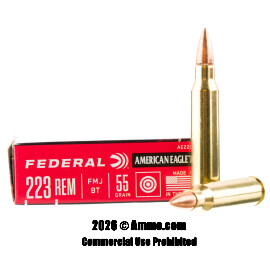
Federal 223 Ammo - 500 Rounds of 55 Grain FMJ-BT Ammunition
 Save $59.00
$288.99
$229.99
61 In stock now
-
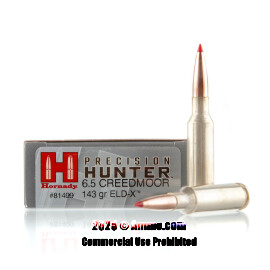
Hornady Precision Hunter 6.5 Creedmoor Ammo - 20 Rounds of 143 Grain ELD-X Ammunition
 $42.99
19 In stock now
-
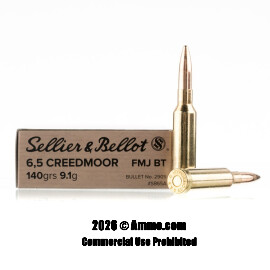
Sellier & Bellot 6.5 Creedmoor Ammo - 20 Rounds of 140 Grain FMJBT Ammunition
 $21.99
108 In stock now
-
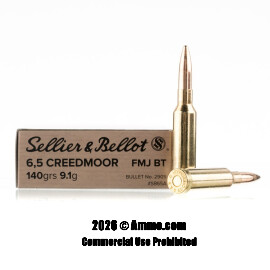
Sellier and Bellot 6.5 Creedmoor Ammo - 500 Rounds of 140 Grain FMJ-BT Ammunition
 $499.99
68 In stock now
-
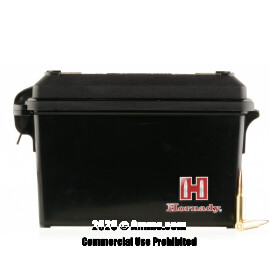
Hornady American Gunner 6.5 Creedmoor Ammo - 200 Rounds of 140 Grain BTHP Ammunition
 Save $40.00
$279.99
$239.99
70 In stock now
-
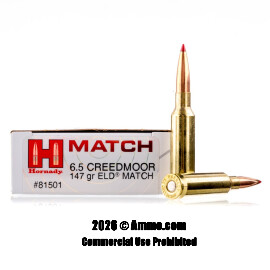
Hornady 6.5 Creedmoor Ammo - 200 Rounds of 147 Grain ELD Match Ammunition
 $398.99
14 In stock now
-
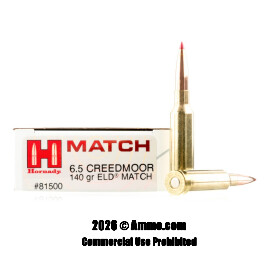
Hornady 6.5 Creedmoor Ammo - 200 Rounds of 140 Grain ELD Match Ammunition
 Save $27.00
$404.99
$377.99
71 In stock now
-
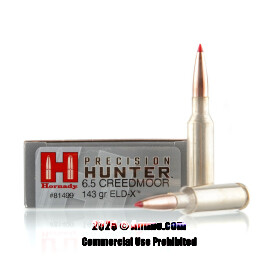
Hornady Precision Hunter 6.5 Creedmoor Ammo - 200 Rounds of 143 Grain ELD-X Ammunition
 $419.99
7 In stock now
-
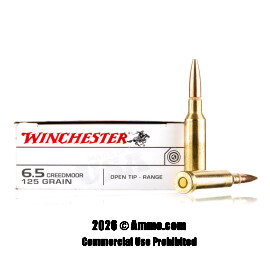
Winchester USA 6.5 Creedmoor Ammo - 200 Rounds of 125 Grain Open Tip Ammunition
 Save $30.00
$219.99
$189.99
61 In stock now
Compare Ammo by Cartridge
190 head-to-head comparisons, grouped by platform. Find your cartridge, tap to open its matchups:
Handgun
23 cartridges
9mm 19
- .380 ACP vs 9mm
- 9mm vs 45 ACP
- 9mm vs 40 S&W
- .357 SIG vs 9mm
- 10mm vs 9mm
- 9mm vs 9mm Luger
- 9mm vs 40 vs 45
- 357 Magnum vs 9mm
- 5.7 vs 9mm
- 22 vs 9mm
- 9mm Makarov vs 9mm Luger
- 32 ACP vs 9mm
- 38 Special vs. 9mm
- 30 Super Carry vs. 9mm
- 5.56 vs 9mm
- .50 Action Express vs 9mm
- 7.62x25 vs. 9mm
- 38 Super vs. 9mm
- 25 ACP vs. 9mm
45 ACP 12
357 Magnum 7
44 Magnum 7
10mm 6
38 Special 5
25 ACP 2
32 ACP 2
357 SIG 2
454 Casull 2
30 Super Carry 1
38 S&W 1
45 GAP 1
460 Rowland 1
460 S&W 1
7.62x25 Tokarev 1
9mm Makarov 1
Rifle
58 cartridges
308 Winchester 18
- .308 vs 5.56
- 6.5 Creedmoor vs .308
- .300 Blackout vs .308
- .300 Win Mag vs .308
- .243 vs .308
- .308 vs .30-06
- 7mm-08 vs .308
- .270 vs .308
- 7.62x39 vs .308
- .223 vs .308
- .338 Lapua vs .308
- 6.5 Grendel vs .308
- 450 Bushmaster vs 308
- 277 Fury vs 308
- 300 PRC vs 308
- 7.62x39 vs 7.62x51
- 7.62x54r vs. 308 Winchester
- 300 Savage vs. 308 Win
223 Remington 17
- .223 vs .308
- .223 vs 5.56
- 300 Blackout vs 223
- 224 Valkyrie vs 223
- 22-250 vs 223
- 5.7x28 vs 223
- 450 Bushmaster vs 223
- 22 Hornet vs 223
- 204 Ruger vs 223
- 30 Carbine vs 223
- 350 Legend vs 223
- 277 Fury vs 223
- 243 Win vs 223 Rem
- 22 ARC vs. 223 Rem
- 22 LR vs. 223 Rem
- 6.5 Creedmoor vs. 223 Rem
- 223 Wylde vs. 223 Rem
5.56 NATO 17
6.5 Creedmoor 16
- 6.5 Creedmoor vs .308
- 6mm Creedmoor vs 6.5 Creedmoor
- 6.8 Western vs 6.5 Creedmoor
- 243 vs 6.5 Creedmoor
- 260 Remington vs 6.5 Creedmoor
- 28 Nosler vs 6.5 Creedmoor
- 6.8 SPC vs 6.5 Creedmoor
- 6.5x55 vs 6.5 Creedmoor
- 6.5 Creedmoor vs 270
- 6.5 Grendel vs 6.5 Creedmoor
- 6.5 PRC vs 6.5 Creedmoor
- 277 Fury vs 6.5 Creedmoor
- 300 PRC vs 6.5 Creedmoor
- 6.5 Creedmoor vs. 30-06 Springfield
- 6.5 Creedmoor vs. 300 Win Mag
- 6.5 Creedmoor vs. 223 Rem
300 Win Mag 13
- .300 Win Mag vs .308
- .300 Win Mag vs .30-06
- 300 Win Mag vs 338 Lapua
- 300 PRC vs 300 Win Mag
- 300 WSM vs 300 Win Mag
- 300 Win Mag vs 338 Win Mag vs 338 Lapua Mag
- 300 Win Mag vs 300 Norma
- 28 Nosler vs 300 Win Mag
- 7mm Rem Mag vs 300 Win Mag
- 277 Fury vs 300 Win Mag
- 300 Blackout vs 300 Win Mag
- 7mm PRC vs 300 Win Mag
- 6.5 Creedmoor vs. 300 Win Mag