38 Special vs. 380 ACP: Can They Be That Different?
Are 38 Special and 380 ACP different? Yes! These cartridges are very different because they were created for different types of handguns. Yet, they also share some similarities. As you continue reading this 38 Special vs. 380 ACP comparison, you’ll discover which cartridge is the better option for your situation. And yes, one is better than the other.
Overview of the 38 Special and 380 ACP
The 38 Special was designed in 1898 for use in revolvers. It has stood the test of time, and remains a favorite among many shooters for its low recoil and relatively inexpensive 38 Special ammo Whenever I’m feeling a bit nostalgic, I like to take my grandpa’s 38 SPL revolver to the range and punch a few holes in some paper.
The 380 Automatic Colt Pistol (also known as 380 ACP, 380 Auto, 9mm Short, or simply "380") is the brainchild of legendary gunsmith John Moses Browning. He created the cartridge in 1908, though it remains a popular choice for self-defense and plinking because of its low recoil, inexpensive 380 ammo, and abundant firearm selection.
38 Special and 380 ACP Pros and Cons
| Performance Aspect | Better Choice | Why |
|---|---|---|
| Recoil | 380 Auto | The 380 generally has less recoil, so recoil-sensitive shooters will find it more manageable. |
| Home/self-defense | 380 Auto | Though less powerful, the 380 Auto is better because semi-auto handguns tend to have higher capacity and are more easily concealed. |
| Ammo selection and availability | Tie | Both cartridges offer a large selection of practice and self-defense ammo. |
| Capacity | 380 Auto | The 380 pistol generally has a magazine capacity of 6 to 15 rounds. The 38 SPL revolver has a cylinder capacity of 5 to 6 rounds. |
| Firearm availability | Tie | The 380 Auto is chambered in semi-auto pistols like the Glock 42, S&W Shield EZ, and Beretta 84. The 38 SPL is chambered in revolvers ranging from small-frame snub-nosed to larger police and target revolvers. Also, every 357 Magnum firearm can additionally fire 38 SPL. It ultimately depends on personal preference. |
Ballistics Comparison: Velocity, Energy, and Bullet Drop
How does each cartridge perform on paper? Let’s find out.
38 Special Ballistics
Note: This information comes from ammo manufacturers. Actual ballistics obtained with your firearm can vary considerably from advertised ballistics. Also, ballistics can vary from lot to lot with the same brand and type load.
| Mfr | Brand | Bullet | Barrel Length (in) | G1 BC | Velocity (fps) | Energy (ft-lbs) | Elevation (in) | ||||||||||||
|---|---|---|---|---|---|---|---|---|---|---|---|---|---|---|---|---|---|---|---|
| 0yds | 25yds | 50yds | 75yds | 100yds | 0yds | 25yds | 50yds | 75yds | 100yds | 0yds | 25yds | 50yds | 75yds | 100yds | |||||
| Hornady | Critical Defense | 90gr FTX | 4 | 0.095 | 1200 | 1103 | 1032 | 976 | 931 | 288 | 243 | 213 | 190 | 173 | -0.2 | 0.8 | 0.0 | -2.8 | -7.9 |
| Federal | American Eagle Indoor Range Training | 100gr Lead-Free IRT | 4 | 0.174 | 960 | 936 | 913 | 893 | 873 | 205 | 194 | 185 | 177 | 169 | -0.2 | 1.2 | 0.0 | -3.7 | -10.2 |
| Winchester | Silvertip | 110gr JHP | 4 | 0.149 | 945 | 918 | 894 | 871 | 850 | 218 | 206 | 195 | 185 | 177 | -0.2 | 1.2 | 0.0 | -3.9 | -10.7 |
380 ACP Ballistics
Note: This information comes from ammo manufacturers. Actual ballistics obtained with your firearm can vary considerably from advertised ballistics. Also, ballistics can vary from lot to lot with the same brand and type load.
For a complete breakdown of velocity, energy, and trajectory across multiple bullet weights, visit our guide to 380 ballistics, or our guide to 38 Special ballistics for the other round on this page.
| Mfr | Brand | Bullet | Barrel Length (in) | G1 BC | Velocity (fps) | Energy (ft-lbs) | Elevation (in) | ||||||||||||
|---|---|---|---|---|---|---|---|---|---|---|---|---|---|---|---|---|---|---|---|
| 0yds | 25yds | 50yds | 75yds | 100yds | 0yds | 25yds | 50yds | 75yds | 100yds | 0yds | 25yds | 50yds | 75yds | 100yds | |||||
| Barnes | TAC-XPD | 80gr TAC-XP | 2 | 0.107 | 990 | 947 | 910 | 878 | 848 | 174 | 159 | 147 | 137 | 128 | -0.2 | 1.1 | 0.0 | -3.7 | -10.3 |
| Hornady | Critical Defense | 90gr FTX | 4 | 0.099 | 1000 | 952 | 912 | 877 | 845 | 200 | 181 | 166 | 154 | 143 | -0.2 | 1.1 | 0.0 | -3.7 | -10.2 |
| Federal | Hydra-Shok Deep | 99gr JHP | 3.75 | 0.093 | 975 | 929 | 889 | 854 | 822 | 209 | 190 | 174 | 160 | 149 | -0.2 | 1.2 | 0.0 | -3.9 | -10.8 |
Recoil and Shooting Experience
Neither cartridge will break your wrist on ignition. Both are considered to have low to moderate recoil by most shooters. My wife, who isn’t a fan of recoil, loves her 380 ACP pistol because it has so little kick, but doesn’t mind occasionally firing a 38 Special revolver, either.


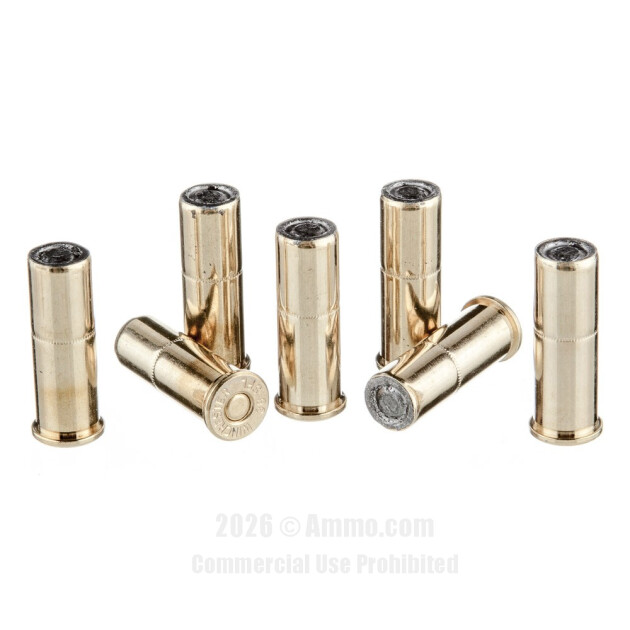

Winchester Super-X 38 Special Ammo - 500 Rounds of 148 Grain Wadcutter Ammunition
Out of stock
With that said, the 38 Special has more recoil because it fires heavier projectiles at higher velocities.
Accuracy and Effective Range
Even though it has slightly more recoil, most shooters find they are more accurate with the 38 Special because it has a flatter trajectory. It also has a farther effective range, thanks to its heavier bullets traveling at higher velocities. The 38 Special’s bullets maintain more energy downrange, and are less affected by the wind.
Penetration and Terminal Ballistics
Penetration and terminal ballistics are primarily determined by bullet design and striking energy. However, since 38 SPL bullets are fired at higher velocities and tend to conserve energy more effectively, they will generally penetrate deeper and achieve better terminal ballistics. In practice, the differences between the two rounds’ terminal ballistics are so slight that they aren’t enough to base a strong preference on. The two land close enough on paper that brand and bullet choice decide it, and Underwood 380 ammo is one of the maker pages to know.
38 Special vs 380 ACP Specs
Though these cartridges do fire bullets that are close in diameter, that’s where their similarities end.
| 38 Special | 380 Auto | |
|---|---|---|
| Bullet Diameter | 0.357" | 0.355" |
| Neck Diameter | 0.379" | 0.373" |
| Base Diameter | 0.379" | 0.374" |
| Case Length | 1.155" | 0.680" |
| Overall Length | 1.550" | 0.984" |
| Case Capacity | 23.4 grains H2O | 11.80 grains H2O |
| Max Pressure (SAAMI) | 17,500 psi | 21,500 psi |
Typical Capacities: 380 Pistols vs. 38 Revolvers
Depending on the model, a 38 Special revolver holds only 5 to 6 rounds. In a self-defense situation, 6 rounds isn't very many opportunities to stop the threat. While at the range, it won't matter nearly as much, but if you enjoy spending more time shooting than reloading, you'll likely want to go with a 380 Auto pistol.


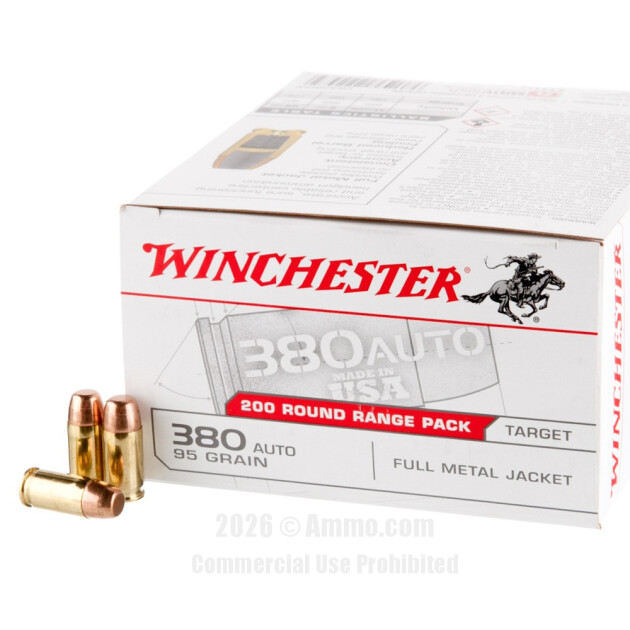
Winchester USA 380 ACP Ammo - 1000 Rounds of 95 Grain FMJ Ammunition
Out of stock
Instead of 6 rounds maximum, a 380 ACP handgun typically holds a minimum of 6 and a maximum of 15 (depending on magazine size).
Which Is Better for Home Defense or Tactical Shooting?
The 380 Auto is better for home defense or tactical shooting. It has a higher capacity in a semi-auto pistol.
Which Is Better for Concealed Carry?
The 380 Auto is also better for concealed carry. The average 380 ACP pistol is small and easy to conceal, and still has higher ammo capacity than a 38 Special revolver. Just load it with something built for the job – our 380 hollow point ammo page collects the defensive JHP loads we stock.
Final Verdict: 38 Special or 380 ACP?
While I enjoy shooting a 38 Special revolver when I'm feeling nostalgic, I would choose a 380 Auto over it in most other situations. 380 ACP ammo costs slightly less, is equally abundant, and performs similarly (though it is less powerful). Finally, most 380 ACP pistols have a higher ammo capacity – and every shot counts when you're shooting for all the marbles.
If that pushes you toward the 380, Fiocchi 380 ammo is a sensible starting point, with a 95 grain FMJ for range work and a 90 grain JHP for carry.
Comparing the 38 Special against the other rounds that share its name? Read our 38 Special vs. 38 Super comparison next.

Compare Ammo by Cartridge
190 head-to-head comparisons, grouped by platform. Find your cartridge, tap to open its matchups:
Handgun
23 cartridges
9mm 19
- .380 ACP vs 9mm
- 9mm vs 45 ACP
- 9mm vs 40 S&W
- .357 SIG vs 9mm
- 10mm vs 9mm
- 9mm vs 9mm Luger
- 9mm vs 40 vs 45
- 357 Magnum vs 9mm
- 5.7 vs 9mm
- 22 vs 9mm
- 9mm Makarov vs 9mm Luger
- 32 ACP vs 9mm
- 38 Special vs. 9mm
- 30 Super Carry vs. 9mm
- 5.56 vs 9mm
- .50 Action Express vs 9mm
- 7.62x25 vs. 9mm
- 38 Super vs. 9mm
- 25 ACP vs. 9mm
45 ACP 12
357 Magnum 7
44 Magnum 7
10mm 6
38 Special 5
25 ACP 2
32 ACP 2
357 SIG 2
454 Casull 2
30 Super Carry 1
38 S&W 1
45 GAP 1
460 Rowland 1
460 S&W 1
7.62x25 Tokarev 1
9mm Makarov 1
Rifle
58 cartridges
308 Winchester 18
- .308 vs 5.56
- 6.5 Creedmoor vs .308
- .300 Blackout vs .308
- .300 Win Mag vs .308
- .243 vs .308
- .308 vs .30-06
- 7mm-08 vs .308
- .270 vs .308
- 7.62x39 vs .308
- .223 vs .308
- .338 Lapua vs .308
- 6.5 Grendel vs .308
- 450 Bushmaster vs 308
- 277 Fury vs 308
- 300 PRC vs 308
- 7.62x39 vs 7.62x51
- 7.62x54r vs. 308 Winchester
- 300 Savage vs. 308 Win
223 Remington 17
- .223 vs .308
- .223 vs 5.56
- 300 Blackout vs 223
- 224 Valkyrie vs 223
- 22-250 vs 223
- 5.7x28 vs 223
- 450 Bushmaster vs 223
- 22 Hornet vs 223
- 204 Ruger vs 223
- 30 Carbine vs 223
- 350 Legend vs 223
- 277 Fury vs 223
- 243 Win vs 223 Rem
- 22 ARC vs. 223 Rem
- 22 LR vs. 223 Rem
- 6.5 Creedmoor vs. 223 Rem
- 223 Wylde vs. 223 Rem
5.56 NATO 17
6.5 Creedmoor 16
- 6.5 Creedmoor vs .308
- 6mm Creedmoor vs 6.5 Creedmoor
- 6.8 Western vs 6.5 Creedmoor
- 243 vs 6.5 Creedmoor
- 260 Remington vs 6.5 Creedmoor
- 28 Nosler vs 6.5 Creedmoor
- 6.8 SPC vs 6.5 Creedmoor
- 6.5x55 vs 6.5 Creedmoor
- 6.5 Creedmoor vs 270
- 6.5 Grendel vs 6.5 Creedmoor
- 6.5 PRC vs 6.5 Creedmoor
- 277 Fury vs 6.5 Creedmoor
- 300 PRC vs 6.5 Creedmoor
- 6.5 Creedmoor vs. 30-06 Springfield
- 6.5 Creedmoor vs. 300 Win Mag
- 6.5 Creedmoor vs. 223 Rem
300 Win Mag 13
- .300 Win Mag vs .308
- .300 Win Mag vs .30-06
- 300 Win Mag vs 338 Lapua
- 300 PRC vs 300 Win Mag
- 300 WSM vs 300 Win Mag
- 300 Win Mag vs 338 Win Mag vs 338 Lapua Mag
- 300 Win Mag vs 300 Norma
- 28 Nosler vs 300 Win Mag
- 7mm Rem Mag vs 300 Win Mag
- 277 Fury vs 300 Win Mag
- 300 Blackout vs 300 Win Mag
- 7mm PRC vs 300 Win Mag
- 6.5 Creedmoor vs. 300 Win Mag