28 Gauge vs. 20 Gauge: Which Sub-Gauge Is Better?
Sub-gauges like the 20 Gauge and 28 Gauge have surged in popularity in recent years for many reasons. I love to see it, because I grew up dove and duck hunting with sub-gauges like the 410 Bore and 20 Gauge.
In this article, we'll compare the 28 Gauge vs. 20 Gauge in terms of size (the bore and the shell), recoil, patterning, stopping power, and hunting capabilities. Let's see just how different these shotgun gauges are from one another!
What Makes These Gauges Different
- Size - The 20 Gauge has a larger bore diameter: 0.615", compared to 0.550" for the 28 Gauge. Both gauges commonly offer shells in 2-¾ or 3" lengths. The bigger size of the 20 Gauge generally allows for a heavier payload: ⅞ to 1-¼ ounces, whereas the smaller 28 Gauge usually has ¾ to 1 ounces.
- Recoil - The 28 Gauge has noticeably less recoil than the 20 Gauge. The 28 Gauge generates about 12.5 ft-lbs of recoil energy; the 20 Gauge, about 16 to 21 ft-lbs.
- Pattern - The 20 Gauge's larger hull holds more shot pellets, the reason why it produces a wider, denser pattern than the 28 Gauge.
- Ease of shooting - The 28 Gauge is easier to shoot than the 20 Gauge because of its lower recoil and lighter shotguns.
- Stopping power - The 20 Gauge's larger size and heavier shot column grant it more stopping power than the 28 Gauge.
- Hunting - The 20-Gauge is the more versatile hunting round for upland birds, waterfowl, small game, turkey, and deer. The 28-Gauge is primarily limited to small game and upland bird hunting.
Bore Sizes
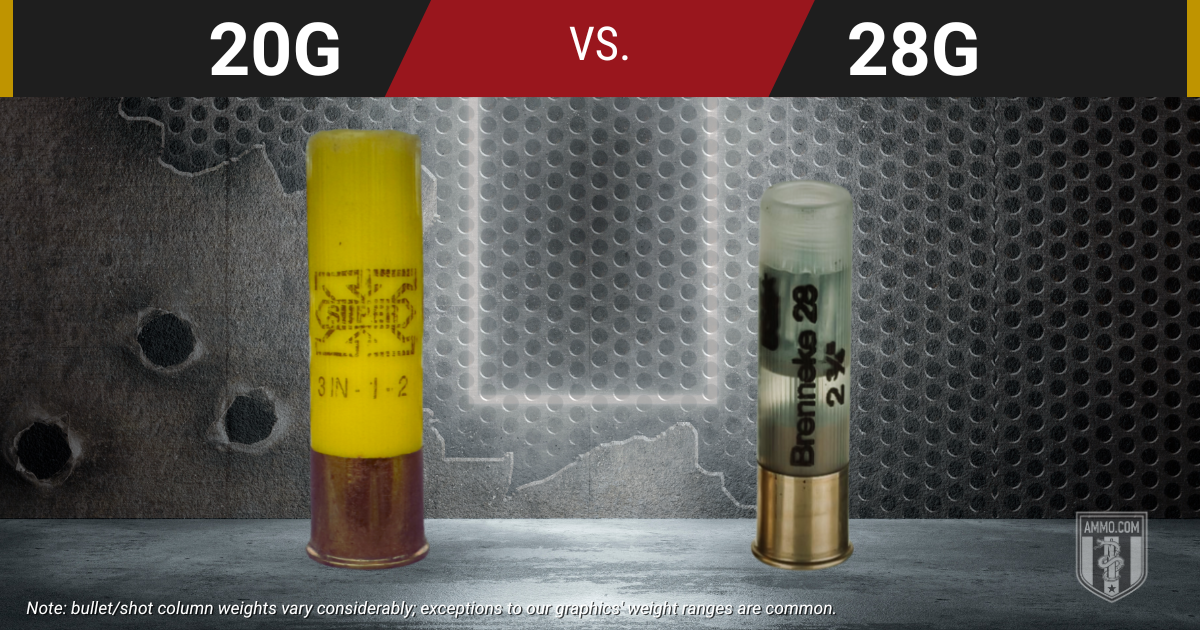
At first glance, these two shells could easily be mistaken for one another. The 20 Gauge has a bore diameter of 0.615"; the 28 Gauge 0.550". That 0.065" diameter difference may be barely perceptible to the naked eye, but it has a significant impact on performance.
Favorite Loads
| Use Case | Winner | Shells |
|---|---|---|
| Skeet/Trap/Sporting Clays | 20 Gauge | Federal All American ⅞ oz #7-½ |
| Upland Hunting | 28 Gauge | Winchester Super-X 1 oz #7-½ |
| Waterfowl Hunting | 20 Gauge | Winchester Drylok Super Steel ¾ oz #4 |
Which Gauge Is Easier to Shoot?
Each gauge has distinct advantages over the other. Understanding them is easy, and will help you determine which is the better choice for your needs.
28 Gauge vs. 20 Gauge Recoil


Winchester Super-X 28 Gauge Ammo - 250 Rounds of 2-3/4" 1 oz. #7-1/2 Shot Ammunition
14 In stock now
The 28 Gauge is the better option for recoil-sensitive shooters. It has noticeably less recoil than the 20 Gauge. The 28 Gauge produces ~12.5 ft-lbs of recoil energy; the 20 Gauge, ~16 to 21 ft-lbs.
I grew up firing my pump-action 20 Gauge at ducks, rabbits, dove, and clays as a small-framed kid ("100 pounds soaking wet," as they say). I didn't have any problems with it. When my 10-year-old cousin was just getting into duck hunting, he used my 20 Gauge to harvest his first. That's only to say that the 28 Gauge may have less recoil, but the 20 Gauge isn't shoulder-breaking by even novice or recoil-sensitive hunters' standards.
20 Gauge vs. 28 Gauge Pattern Density & Range
The 20 Gauge has a slightly farther range and maintains tighter pattern density than the 28 Gauge. Since 20 Gauge shells hold more pellets, they can put more holes into their target. That means fewer misses. The two shells' effective ranges really aren't all that different, though. You might be able to squeeze out a few extra yards out of the 20 Gauge, but most shooters won't notice a huge advantage over the 28 Gauge.
Stopping Power
The 20 Gauge and 28 Gauge are often incorrectly thought of as underpowered for many applications. With the proper load, the 20 Gauge delivers enough stopping power to ethically harvest deer at close range. So long as it is loaded with #5 or larger shot, I wouldn't hesitate to use either for home defense. You don't need a 12 Gauge to achieve the necessary stopping power for hunting and home defense.
Hunting

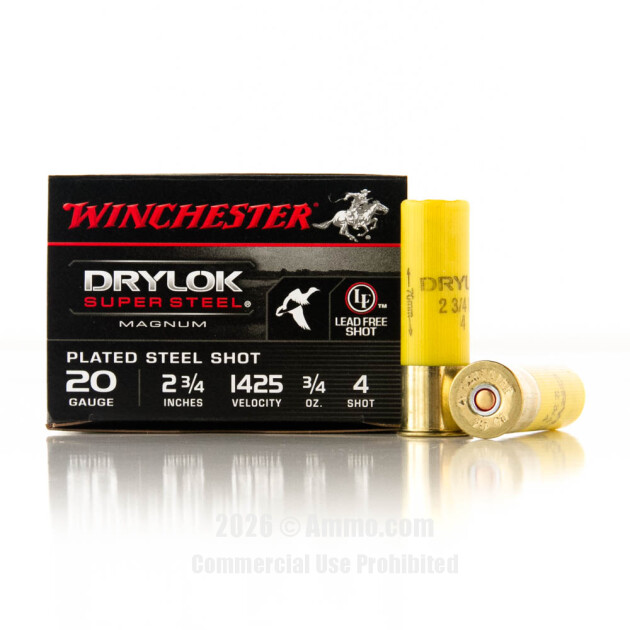


Winchester DryLok Super Steel 20 Gauge Ammo - 25 Rounds of 3/4 oz. #4 Steel Shot Ammunition
Out of stock
Only a few hunters use the 28 Gauge for anything other than small game and upland hunting. I know of a select group of turkey hunters who love to challenge themselves with small-bore shotguns like the 28 Gauge, but most turkey hunters use a 20 or a 12 Gauge.
The 20 Gauge is much more versatile, with a variety of hunting loads readily available. It can ethically harvest anything from delicate upland birds to whitetail deer. I've harvested countless ducks, doves, and rabbits with my 20 Gauge, and plan to pass it down to my kids to do the same.
For load recommendations across upland, waterfowl, and deer hunting, check our guide to the best 20 gauge ammo.
Ammo & Gun Cost/Availability
For shotgunners on a tight budget, the 20 Gauge is the way to go. It has many more reasonably priced ammo and gun options than the 28 Gauge. The 28 Gauge is far more niche by comparison, with only a few manufacturers producing shotguns and ammo for it. For range-day volume, check our selection of bulk 20 gauge ammo.
Parting Shots: 28 Gauge vs. 20 Gauge
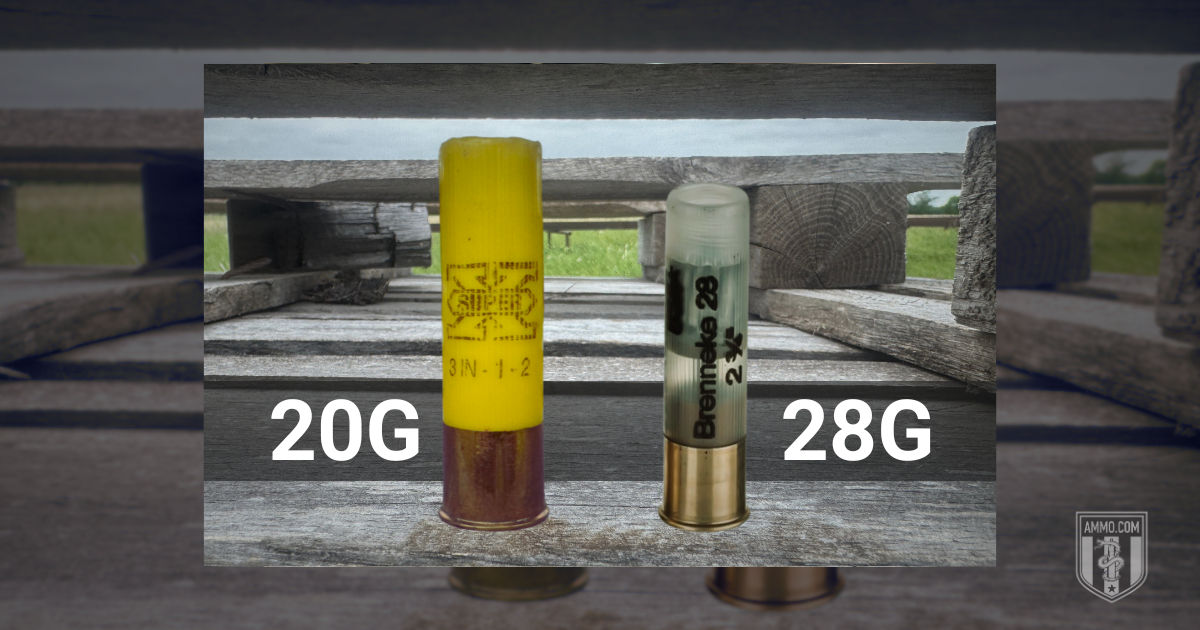
The 28 and 20 Gauge are similar in several ways, but different enough to justify a strong preference for one over the other. It ultimately boils down to personal preference. If you're still weighing sub-gauges, also see our 28 Gauge vs. 410 Bore comparison.
Choose the 28 Gauge If…
You are recoil-sensitive, only plan to shoot clays or hunt small/upland game, and don't mind paying more for your shotgun and ammo.
Choose the 20 Gauge If…
You're on a tighter budget and desire more hunting versatility out of your shotgun.

-
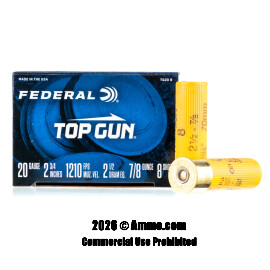
Federal 20 Gauge Ammo - 250 Rounds of 7/8 oz. #8 Shot Ammunition
 $95.99
60 In stock now
-
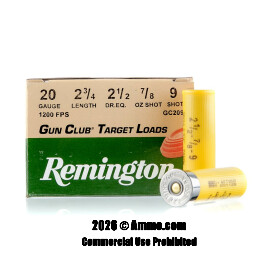
Remington 20 ga Ammo - 250 Rounds of 7/8 oz. #9 Shot (Lead) Ammunition
 $98.99
6 In stock now
-
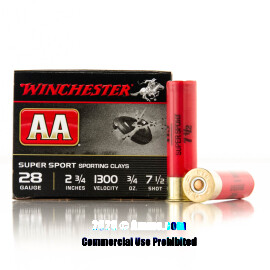
Winchester AA 28 Gauge Ammo - 25 Rounds of 3/4 oz. #7-1/2 Shot Ammunition
 $17.99
6 In stock now
-
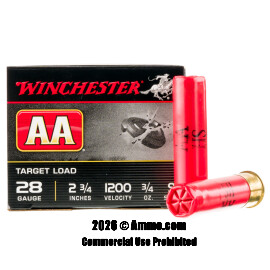
Winchester AA Target 28 Gauge Ammo - 25 Rounds of 2-3/4" 3/4 oz. #9 Shot Ammunition
 $17.49
72 In stock now
-
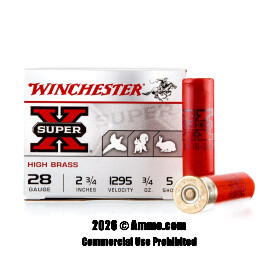
Winchester Super-X 28 Gauge Ammo - 25 Rounds of 2 3/4" 3/4 oz. #5 Shot Ammunition
 $19.99
37 In stock now
-
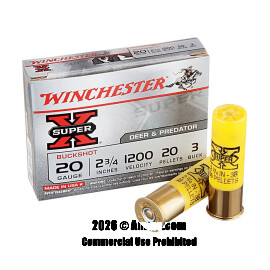
Winchester Super-X 20 Gauge Ammo - 250 Rounds of 2-3/4" #3 Buck Ammunition
 $389.99
2 In stock now
-
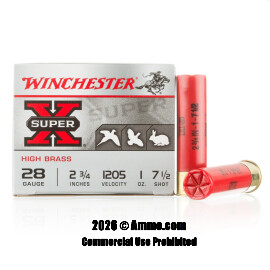
Winchester Super-X 28 Gauge Ammo - 250 Rounds of 2-3/4" 1 oz. #7-1/2 Shot Ammunition
 $234.99
14 In stock now
Compare Ammo by Cartridge
190 head-to-head comparisons, grouped by platform. Find your cartridge, tap to open its matchups:
Handgun
23 cartridges
9mm 19
- .380 ACP vs 9mm
- 9mm vs 45 ACP
- 9mm vs 40 S&W
- .357 SIG vs 9mm
- 10mm vs 9mm
- 9mm vs 9mm Luger
- 9mm vs 40 vs 45
- 357 Magnum vs 9mm
- 5.7 vs 9mm
- 22 vs 9mm
- 9mm Makarov vs 9mm Luger
- 32 ACP vs 9mm
- 38 Special vs. 9mm
- 30 Super Carry vs. 9mm
- 5.56 vs 9mm
- .50 Action Express vs 9mm
- 7.62x25 vs. 9mm
- 38 Super vs. 9mm
- 25 ACP vs. 9mm
45 ACP 12
357 Magnum 7
44 Magnum 7
10mm 6
38 Special 5
25 ACP 2
32 ACP 2
357 SIG 2
454 Casull 2
30 Super Carry 1
38 S&W 1
45 GAP 1
460 Rowland 1
460 S&W 1
7.62x25 Tokarev 1
9mm Makarov 1
Rifle
58 cartridges
308 Winchester 18
- .308 vs 5.56
- 6.5 Creedmoor vs .308
- .300 Blackout vs .308
- .300 Win Mag vs .308
- .243 vs .308
- .308 vs .30-06
- 7mm-08 vs .308
- .270 vs .308
- 7.62x39 vs .308
- .223 vs .308
- .338 Lapua vs .308
- 6.5 Grendel vs .308
- 450 Bushmaster vs 308
- 277 Fury vs 308
- 300 PRC vs 308
- 7.62x39 vs 7.62x51
- 7.62x54r vs. 308 Winchester
- 300 Savage vs. 308 Win
223 Remington 17
- .223 vs .308
- .223 vs 5.56
- 300 Blackout vs 223
- 224 Valkyrie vs 223
- 22-250 vs 223
- 5.7x28 vs 223
- 450 Bushmaster vs 223
- 22 Hornet vs 223
- 204 Ruger vs 223
- 30 Carbine vs 223
- 350 Legend vs 223
- 277 Fury vs 223
- 243 Win vs 223 Rem
- 22 ARC vs. 223 Rem
- 22 LR vs. 223 Rem
- 6.5 Creedmoor vs. 223 Rem
- 223 Wylde vs. 223 Rem
5.56 NATO 17
6.5 Creedmoor 16
- 6.5 Creedmoor vs .308
- 6mm Creedmoor vs 6.5 Creedmoor
- 6.8 Western vs 6.5 Creedmoor
- 243 vs 6.5 Creedmoor
- 260 Remington vs 6.5 Creedmoor
- 28 Nosler vs 6.5 Creedmoor
- 6.8 SPC vs 6.5 Creedmoor
- 6.5x55 vs 6.5 Creedmoor
- 6.5 Creedmoor vs 270
- 6.5 Grendel vs 6.5 Creedmoor
- 6.5 PRC vs 6.5 Creedmoor
- 277 Fury vs 6.5 Creedmoor
- 300 PRC vs 6.5 Creedmoor
- 6.5 Creedmoor vs. 30-06 Springfield
- 6.5 Creedmoor vs. 300 Win Mag
- 6.5 Creedmoor vs. 223 Rem
300 Win Mag 13
- .300 Win Mag vs .308
- .300 Win Mag vs .30-06
- 300 Win Mag vs 338 Lapua
- 300 PRC vs 300 Win Mag
- 300 WSM vs 300 Win Mag
- 300 Win Mag vs 338 Win Mag vs 338 Lapua Mag
- 300 Win Mag vs 300 Norma
- 28 Nosler vs 300 Win Mag
- 7mm Rem Mag vs 300 Win Mag
- 277 Fury vs 300 Win Mag
- 300 Blackout vs 300 Win Mag
- 7mm PRC vs 300 Win Mag
- 6.5 Creedmoor vs. 300 Win Mag